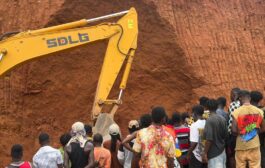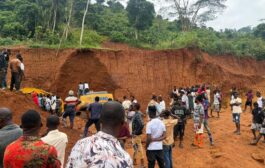


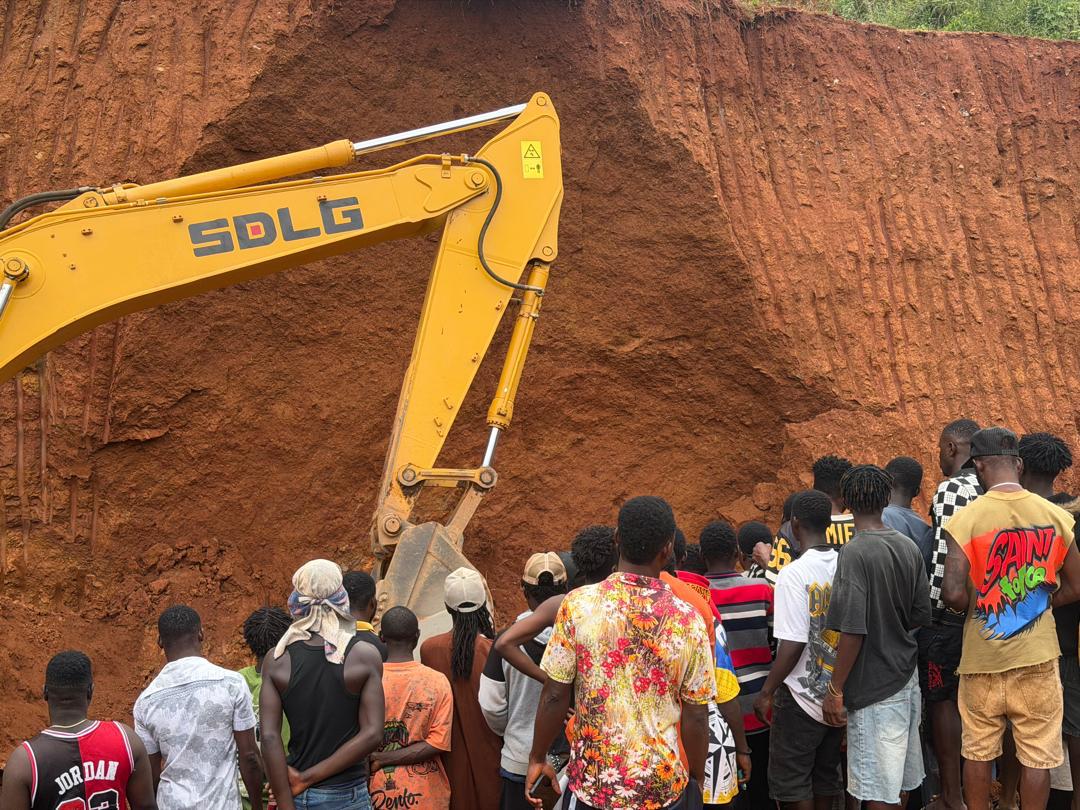
The Atiwa East District Security Council, DISEC, has visited the scene of a deadly collapse at a decommissioned mining site at Asaman Tamfoe, where seven suspected illegal miners were killed.
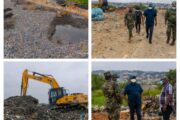
The visit, led by the District Chief Executive, Ernest Owusu Ntim, brought together officials from the Ghana Police Service, National Intelligence Bureau, NADMO and the Minerals Commission.
The team assessed the collapsed hillside and commenced investigations into the circumstances that led to the disaster.
The tragedy occurred in the early hours of Sunday, August 30, 2026, when the victims allegedly entered the decommissioned mining site operated by Extra Gold Mining Company to search for residual gold using basic mining tools.
Authorities say the land had already been mined and reclaimed, with mining equipment removed from the site.
But despite the reclamation, some young people reportedly continued to return to the area in search of gold, exposing themselves to potentially unstable ground.
Speaking to journalists after inspecting the scene, the Atiwa East DCE, Ernest Owusu Ntim, described the situation as a major post-mining challenge confronting the district.
“This has been the challenges that we are going through, especially being a District Chief Executive in a mining area like this.”
He explained that after mining companies complete their operations and reclaim their concessions, some young people return to the sites with shovels and pickaxes in search of residual gold deposits.
“This issue has to do with what we call the post-mining. When the miners finish and then you force them to do their reclamation, you find at least our youth coming back with their own means, not trying to use heavy equipment, but with shovels and pickaxes in order to just get their daily bread.”
Mr. Owusu Ntim said the Assembly has established a task force to monitor illegal mining activities but acknowledged the difficulty of completely preventing people from accessing abandoned and reclaimed mining sites.
He said the Assembly will intensify education and sensitisation in mining communities while strengthening measures to prevent residents from returning to dangerous areas.
The DCE also warned that the physical structure of the collapsed hillside made the illegal mining activity particularly dangerous.
“It is a tall mountain or hill and then you decide to work under it. It is not a rocky area where the stones could hold themselves together. By all means, it will give way.”
Authorities are now assessing the site for additional cracks and other signs of instability that could pose a threat to residents and emergency responders.
They are also considering whether heavy equipment will be required to stabilise or remove sections of the dangerous hillside.
The Asaman Tamfoe disaster comes amid growing concerns over mining-related deaths in the Eastern Region.
The National Disaster Management Organisation, NADMO, says not less than 30 people have died in galamsey-related incidents across mining districts in the region since January 2026.
The Deputy Eastern Regional NADMO Director in charge of Technical and Disaster Risk Reduction, Emmanuel Konja Tullah, disclosed this while briefing the media at the scene of the Asaman Tamfoe disaster.
He called for stricter enforcement of safety measures and greater responsibility from concession owners to secure their mining sites and prevent illegal access.
“We have had a series of galamsey-related deaths numbering not less than 30 within the region in 2026. The concession owners must strengthen their oversight activities, ensuring the necessary coordination and security measures so these incidents do not recur.”
Mr. Tullah said concession owners must strengthen their oversight and security arrangements, particularly at abandoned, decommissioned and reclaimed mining sites.
Source:Mybrytfmonline.com