

The Kwahu Afram Plains is fast emerging as a major honey production hub in Ghana, following the successful training of 1,000 rural residents in modern beekeeping under a UK-funded livelihood and environmental restoration initiative.
The project, implemented by Bees for Development Ghana Limited, aims to boost local honey production, conserve biodiversity, and create sustainable jobs—ultimately helping Ghana cut down its heavy dependence on imported honey.
A 2020 Ghana EXIM Bank report shows that 60% of honey consumed locally is imported from West Africa, Europe, and Asia, despite Ghana having abundant vegetation suitable for beekeeping.
At a stakeholder engagement meeting held in Donkorkrom in the Kwahu Afram North District, community leaders, beneficiaries, programme partners, and beekeeping experts reviewed the project’s impact and outlined strategies to transform the Afram Plains into a national honey production enclave.
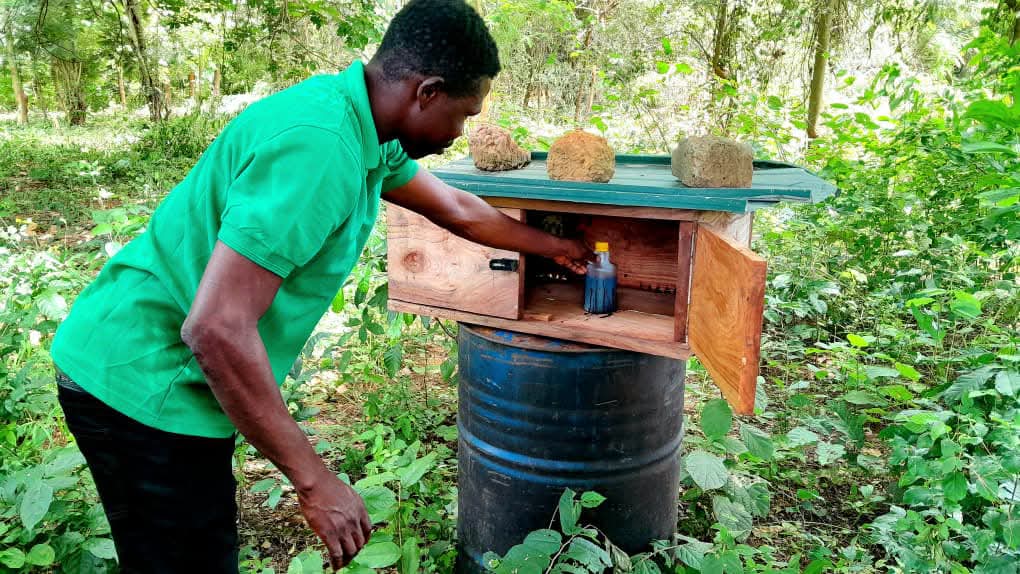
So far, 600 of the trained beneficiaries are producing honey commercially, contributing significantly to local supply while restoring degraded lands.
Programmes Director at Bees for Development Ghana, Isaac Kwadwo Mbroh, said the initiative is deliberately designed to fight rural unemployment while reducing harmful environmental practices such as bush burning.
“For two years now, going into the third year, we have made over 600 people become beekeepers. What they are doing is restoring the forests of our Afram Plains,” he explained.
“People put their hives in the forest, and that prevents bushfires. They protect the trees so that the trees will be there to produce honey for them. This is more sustainable than cutting trees for charcoal.”
He stressed the high economic value of honey, noting that Ghana has the potential to benefit immensely from the global honey market.
“In fact, I would say beekeeping is one of the strongest tools to reduce unemployment in Ghana. Honey is more expensive than oil—fuel, petrol, or diesel. So why can’t we also leverage the power of bees, export more honey, and earn foreign currency to strengthen our economy?”
Director of Programmes at Bees for Development-UK, Dr. Janet Lowore, reaffirmed the commitment of the UK government and its partners to support Ghana’s beekeeping sector through the Darwin Initiative, which funds projects that promote biodiversity and livelihood improvements.
“We’re very excited to be working in Ghana with our partners, stakeholders, friends, and colleagues to further the beekeeping and honey industry,” she said.
She emphasized that the beekeeping sector strongly aligns with global development goals, especially poverty alleviation, women’s empowerment, and sustainable land management.
Growing Yields and Improved Livelihoods
According to industry experts, a well-managed hive can produce up to 10 litres of honey and 3kg of beeswax in its first year, increasing to 20 litres of honey and 6kg of beeswax by the third year. With more than 900 active trainees, the Afram Plains project is expected to add thousands of litres of honey to the Ghanaian market annually.
Beneficiaries say the programme has transformed their lives.One young farmer shared:“After completing SHS, I didn’t have money to continue my education. Bees for Development Ghana introduced me to beekeeping. Today, I earn enough to support myself, and I have opened a boutique as an additional income stream. My life has changed.”
Source:Mybrytfmonline.com/Obed Ansah