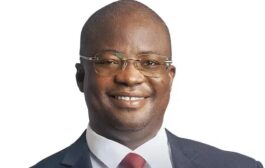



The Vice Chancellor of All Nations University (ANU), Professor Samuel H. Donkor, has emphasized that the institution has made significant strides in promoting excellence and contributing to human capital development in Ghana. Despite these contributions often being underappreciated in national conversations, Prof. Gyimah insists that it is time for Ghana to not just change the narrative but to completely revolutionize it.
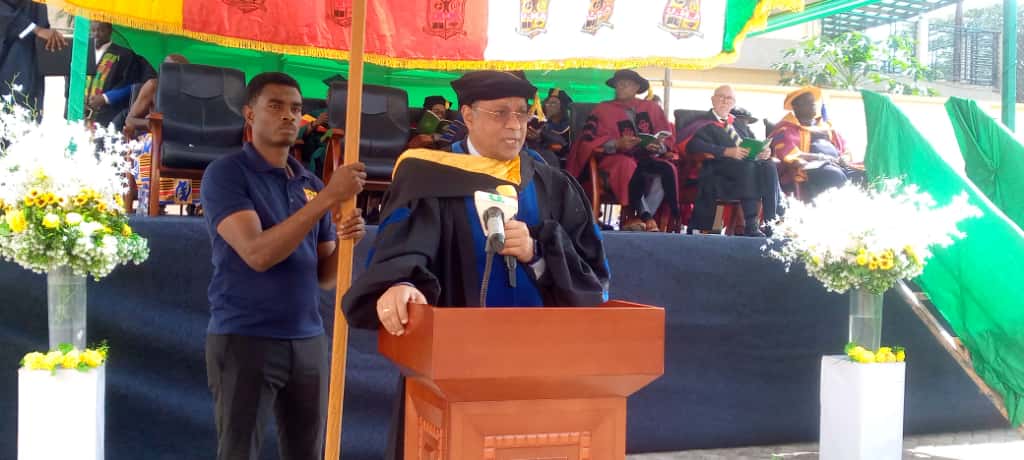
In his address during the 34th Graduation Ceremony, Prof. Donkor highlighted that ANU has become more than just a university; it serves as a guiding light, paving the way toward quality higher education. “We’ve shown time and again that Christ-centered private universities are not just alternatives to public institutions; they are key drivers of national progress,” he stated.
The theme of this year’s graduation, “Private Universities in Nation Building: Changing the Narrative,” urged the country to recognize and elevate the transformative role that private higher education plays in Ghana’s socio-economic development. Prof. Donkor reflected on the university’s remarkable journey, noting that today, ANU is a chartered institution with over 2,000 students enrolled in 14 undergraduate and 12 graduate programs, all fully accredited by the Ghana Tertiary Education Commission.
He proudly pointed out that the Presidential Charter granted to ANU in 2020 by His Excellency Nana Addo Dankwa Akufo-Addo, former President of Ghana, is not just a ceremonial document. It is a symbol of the university’s maturity and its critical place in the country’s educational landscape.
A key milestone in the university’s history, he said, was the launch of GhanaSat-1, the first satellite designed, built, and launched by a university in Sub-Saharan Africa. Deployed from the International Space Station in July 2017, the satellite was a monumental achievement, created by three ANU students. This event positioned both Ghana and ANU at the forefront of space technology innovation. Today, the university’s Space System Technology Laboratory is home to AfDevSat, the first African satellite designed and built entirely by African engineers and scientists.
Prof. Donkor also pointed out the significance of ANU’s biomedical and allied health science programs, including Ghana’s pioneering Bachelor’s degree in Emergency Medicine Technology. These programs, he said, strengthen the country’s healthcare infrastructure and prepare graduates to serve on the frontlines of healthcare with both expertise and compassion.
Another notable achievement, Prof. Donkor shared, was ANU’s integration of the GITFIC-AfCFTA Curriculum into its Business Administration programs, making it the first Ghanaian university to do so. This positions ANU students as leaders in Africa’s economic integration, particularly within the framework of the African Continental Free Trade Area (AfCFTA).
Looking to the future, the Vice Chancellor emphasized the university’s strategic commitment to ensuring graduates are ready for the Fourth Industrial Revolution. Through partnerships with global institutions like Western University, Morgan State University, NASA, and memberships in the Association of Commonwealth Universities and the Association of African Universities, ANU continues to contribute to global knowledge while addressing local challenges with innovative, world-class solutions.

Speaking on a vision for national evolution, Prof. Donkor called for a collective evolution in Ghana’s education and development: access to measurable impact, institutional growth to national leadership, training for employment to fostering innovation and entrepreneurship, knowledge consumption to knowledge creation, local relevance to global competitiveness and a total personality development: a distinctive educational philosophy
At the core of All Nations University’s educational model is its revolutionary concept of Total Personality Development, pioneered by its visionary founding president. This holistic approach ensures that ANU graduates are not just degree holders, but well-rounded individuals — intellectually astute, spiritually grounded, emotionally intelligent, physically vibrant, and socially conscious.
Prof. Donkor averred that graduand s are expected to embody: ethical integrity, critical thinking and research-driven minds, commitment to community service, global competence with cross-cultural fluency and an innovative mindset with entrepreneurial courage
In his inspiring address to the Class of 2025 Prof. Donkor offered a charge to be builders where others see barriers – turn challenges into opportunities for innovation.
He called on them to lead with integrity where others yield to convenience – let your word be your bond and serve humanity with compassion, discipline, and courage – remember that with great gifts come great responsibilities
Prof. Donkor urged them to embrace lifelong learning– education is just the foundation; continue to grow, build bridges, not walls – become ambassadors of unity in a divided world
He advised them to think globally, act locally – apply world-class solutions to Ghana’s challenges
Prof. Donkor concluded with a reference to Proverbs 1:7, reminding graduates that “The fear of the Lord is the beginning of knowledge, but fools despise wisdom and instruction.” He encouraged them to let divine wisdom guide them as they navigate their personal and professional paths.
Looking ahead, All Nations University is committed to becoming a globally recognized, research-intensive institution that sets the standard for private higher education in Africa. With a strategic focus on innovation, entrepreneurship, and applied research, the university’s 2026-2030 Strategic Plan envisions ANU as: a nexus of innovation and entrepreneurship, fostering start-ups and technology transfer to drive economic growth, and a leader in applied research and policy formulation, generating solutions to Ghana’s developmental challenges
Prof. Donkor disclosed that the university is a key partner in Ghana’s industrialization agenda, particularly through a proposed Department of Food Technology and Agribusiness.
“A center of healthcare excellence, expanding international partnerships, including with Tsinghua University A champion of digital transformation, preparing students for the era of artificial intelligence while preserving human values,’’ he affirmed.
The Chief Medical Officer of ITC India, Dr. Sunil Thomas Chandy, delivered the keynote speech at the 34th graduation ceremony, reflecting on three central themes: the privilege of education, the perspective of present realities, and the path ahead for the future.
The Privilege of Education
Dr. Chandy emphasized that education is not merely an achievement but a fundamental right that empowers individuals and communities. He reminded the graduates that they are fortunate to have received quality education, a privilege denied to many.
To him, education extends far beyond the degree itself. It is a formative journey, a time of collegiality, camaraderie, and building relationships within a community of like-minded individuals. It nurtures broad and holistic perspectives about life.
He noted that the sight of graduates in academic robes and caps symbolizes a rare privilege, one that countless others never experience. Education, he said, is ultimately about learning a way of life.
Perspective on Present Realities
Turning to the present, Dr. Chandy urged the graduates to look beyond the certificate in their hands and consider the global realities shaping the future.
“What will you do with this glossy paper that confers you power?” he asked. “For this certificate to carry vision, you must understand what is happening in Africa today.”
He described Africa as a continent rich in natural resources, minerals, vegetation, and genetic reserves of wildlife. With geopolitical shifts bringing Africa into sharper focus, he suggested that the continent may well become the destination of the future within the Global South. Yet, he cautioned, challenges remain.
Dr. Chandy posed a powerful question: “Will you be at the forefront of Africa’s turnaround—whether in economy, environment, healthcare, or education?”
He further stressed that Ghanaians must harness the power of education to confront pressing health challenges. With Africa’s epidemiological profile shifting from a dual burden to a triple burden of disease**, he called for greater sensitivity and action in tackling both communicable and non-communicable diseases.
The Path Ahead – Foresight for the Future
Looking forward, Dr. Chandy highlighted the importance of people-centered skills in driving transformation. He urged graduates to expand their education beyond narrow technical domains into people orientation, consciousness, and stewardship.
He acknowledged that their degrees will bring financial rewards, career advancement, and professional recognition. Yet he challenged them to think beyond material success.
Quoting Abraham Maslow’s famous hierarchy of needs, Dr. Chandy reminded them that true fulfillment lies not only in climbing the career ladder but in reaching the pinnacle of human growth—self-actualization.
In closing, Dr. Chandy’s message was clear: education is both a privilege and a responsibility. It equips graduates not just to succeed personally, but to contribute meaningfully to the transformation of societies and the shaping of a better future.
Through this bold vision, ANU aims to continue its trajectory as a transformative institution, shaping the future of Ghana and the African continent at large.
At the 34th Graduation Ceremony, a total of 562 students graduated—453 earned their first degrees, 58 received master’s degrees, and 51 were awarded diplomas. Among them were 216 males and 346 females.
Source:Mybrytfmonline.com/Nhyiraba Solomon Nartey