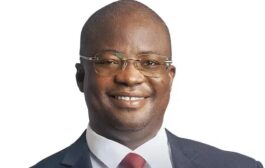


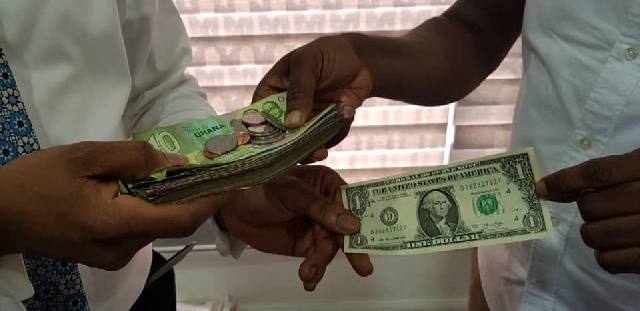
Accra, July 15, 2025 — After years of economic turbulence and currency depreciation, the Ghanaian Cedi has made a remarkable comeback, appreciating by more than 42 percent in the first half of 2025. The announcement was made by the Governor of the Bank of Ghana, Dr. Johnson Asiama, during the Graphic Business/Stanbic Bank Breakfast Meeting held in Accra on Tuesday.
Dr. Asiama described the sharp appreciation as a reflection of renewed investor confidence and improving macroeconomic stability, following two years of intense pressure on the currency.
“The Ghanaian Cedi has appreciated by over 42% year-to-date as of June 2025,” he told the gathering of business leaders, economists, and policymakers. “This marks a near-complete reversal of the losses we saw in 2022 and 2023.”
According to the Governor, the Cedi’s recovery has been driven by a combination of factors, including strengthened external reserves, prudent monetary policies, and a turnaround in the country’s trade performance.
Ghana’s gross international reserves, he revealed, have increased significantly to $11.1 billion, up from $8.98 billion at the end of 2024. This level of reserves now provides 4.8 months of import cover—an important buffer for stabilizing the currency.
“Gross international reserves now stand at $11.1 billion, providing 4.8 months of import cover,” Dr. Asiama noted. “This is a significant improvement from the end of last year.”
The Governor also pointed to Ghana’s trade performance as a major contributor to the economic recovery. In the first four months of 2025, the country recorded a trade surplus of $4.14 billion, buoyed by strong export growth of over 60 percent. Key export drivers included gold, cocoa, and crude oil.
The improved trade balance has translated into a stronger current account position. Ghana recorded a current account surplus of $2.12 billion in the first quarter of 2025, a massive leap from just $66 million in the same period a year ago.
In addition to trade gains, Dr. Asiama said that remittance inflows have remained resilient, providing further support to the balance of payments. He also credited the continued implementation of Ghana’s IMF-supported reform programme for helping to restore investor trust.
The international community has begun to take notice. Credit ratings agency S&P Global recently upgraded Ghana’s sovereign credit rating from Selective Default to CCC+, citing improved fiscal management and external liquidity.
“These outcomes represent more than just statistical improvement,” Dr. Asiama said. “They are a restoration of macroeconomic credibility—the kind that markets, investors, and citizens respond to with confidence.”
The Cedi’s rebound marks a turning point for an economy that, just a year ago, was grappling with high inflation, rising debt, and a depreciating currency. While the gains are encouraging, the BoG Governor stressed that continued vigilance, disciplined economic management, and adherence to structural reforms will be key to sustaining the recovery.
Source:Mybrytfmonline.com/Nana Agyenim Boateng Sikapa