

The Second Regional Co-ordinating Council (RCC) meeting has been held at the Conference Hall of the Eastern Regional Co-ordinating Council in Koforidua.
The meeting was participated by District and Municipal Chief Executives, heads of department and Agencies, Council of state Member Evelyn Korang, and Nananom to celebrate on the state of the Region.
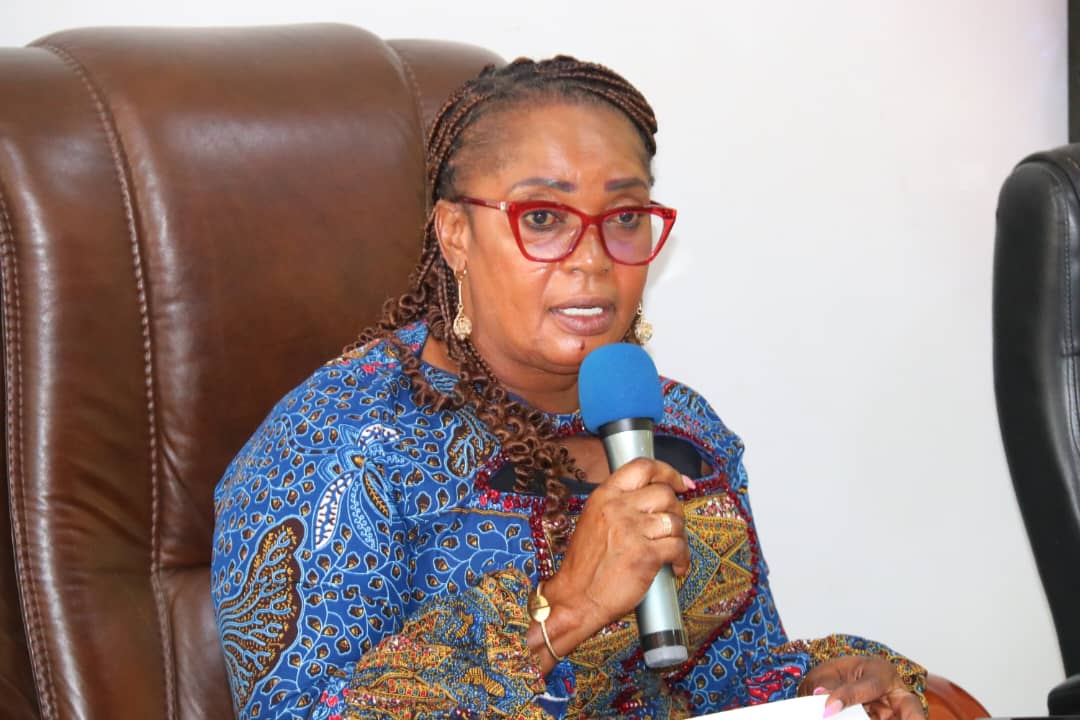
Eastern Regional Minister, Hon. Rita Akosua Adjei Awatey addressing the meeting pledged to intensify efforts to maintain peace in the region while addressing governance gaps, youth unemployment and chieftaincy disputes which continue to pose threats to stability of the region.
According to the Minister, although the region has enjoyed relative peace, emerging security concerns require closer collaboration with the Regional Security Council (REGSEC), traditional authorities and other stakeholders to enhance intelligence gathering and ensure swift responses to potential threats.
On governance and accountability, Hon. Rita Akosua Adjei Awatey stressed the need for Metropolitan, Municipal and District Assemblies (MMDAs) to make prudent use of public resources, reduce waste and strengthen internal capacity for revenue mobilisation and effective service delivery.
She described capacity building and staff motivation as critical to improving performance across Assemblies.
A key focus of the address was the preparation of the 2026–2029 Medium-Term Development Plans (MTDPs).
The Minister expressed concern that some Assemblies initially treated the exercise casually despite its importance to development planning and budgeting.
She, however, disclosed that all 33 Municipal and District Assemblies in the region have now submitted their first draft plans to the National Development Planning Commission (NDPC), with 11 progressing to second drafts.
Out of the 11, six Assemblies—New Juaben North Municipal, Kwahu West Municipal, Lower Manya Krobo Municipal, Yilo Krobo Municipal, Birim North District and Achiase District—have received certification from the NDPC.
The Regional Minister added that the Eastern Regional Co-ordinating Council (ERCC) is among the first RCCs nationwide to secure certification for its Medium-Term Development Plan.
She cautioned Assemblies to take the planning process seriously, noting that the Ministry of Finance will implement a “No Certified Plan, No Cash” policy from 2026. She urged MMDCEs to use approved development plans as blueprints for implementing projects in line with the Public Financial Management Act.
Touching on performance assessment, Hon. Awatey revealed that no Assembly in the Eastern Region scored above 50 percent in planning, budgeting and reporting compliance during the ninth cycle of the District Assemblies’ Performance Assessment Tool (DPAT IX), a situation she said has implications for development financing.
She also announced the introduction of a Smart Workplace system across the public service, aimed at improving efficiency, reducing waste and cutting operational costs through digitalisation. Assemblies were encouraged to prepare staff and logistics to support the rollout of the system in 2026.
On social development, the Minister disclosed that the Eastern Region is benefiting from the UNFPA–Government of Ghana 8th Country Programme (2023–2027), following a baseline assessment that identified vulnerabilities in maternal health, family planning, gender-based violence and access to health facilities.
In the agriculture sector, Hon. Awatey noted that agriculture supports more than 75 percent of households in the region, making it a priority area for investment. She commended MMDAs for successfully celebrating the 2025 Farmers’ Day and highlighted the region’s strong performance at the national level, including winning the Overall Best Farmer award.
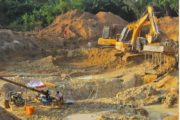
She further outlined interventions under the Feed Ghana Programme, disclosing that 2,887 Farmer-Based Organisations with over 82,000 members have been registered in the region. She also cited the Ghana Landscape Restoration and Small-Scale Mining Project being implemented in five Kwahu districts to support sustainable land management and alternative livelihoods.
In education, the Minister announced that 55 educational infrastructure projects have been awarded under GETFund, covering classroom blocks, dormitories, staff bungalows, dining halls and laboratories across basic schools, senior high schools and tertiary institutions in the region.
Addressing road infrastructure, Hon. Awatey acknowledged the poor state of roads, especially in rural communities, and said engagements with the Ministry of Roads and Highways have resulted in routine maintenance contracts being awarded, with priority given to roads linking markets and agricultural areas.
On sanitation and environmental management, she expressed concern over poor maintenance of communal waste containers in many districts, commending Asuogyaman and West Akim Assemblies for investments in waste management infrastructure. She urged all Assemblies to strengthen National Sanitation Day activities and operationalise the District Inter-Agency Coordinating Committees on Sanitation.
The Minister also encouraged Assemblies to position themselves to benefit from President John Dramani Mahama’s 24-Hour Economy policy by improving security, street lighting and infrastructure to support extended-hour economic activities.
In her concluding remarks, Hon. Awatey called for stronger inter-agency collaboration, accountability and commitment to development, stressing that the challenges facing the region are surmountable with collective effort.
Source:Mybrytfmonline.com/Obed Ansah