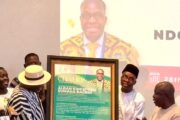


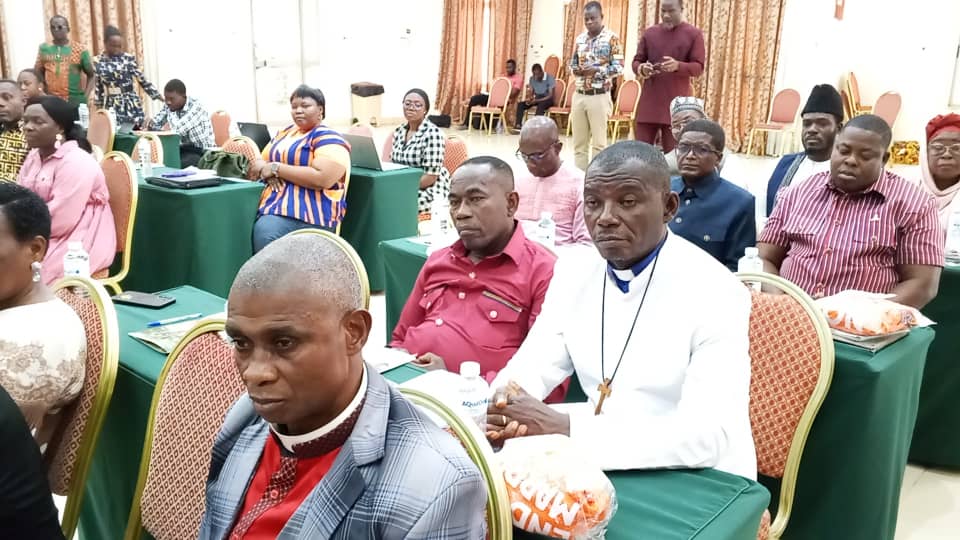
Faith based leaders, traditonal authorities and government representatives have converged for a one-day engagement aimed at addressing harmful practices, gender inequality, and social norms that contribute to Gender-Based Violence (GBV) and child marriages in Ghana.
The engagement, organised by the Ministry of Local Government, Chieftaincy and Religious Affairs (MLGCRA) in partnership with the United Nations Population Fund (UNFPA), brought together representatives from the Regional House of Chiefs, the Regional Coordinating Council, distinguished Christian and Muslim faith leaders, government officials and other key stakeholders committed to social transformation.
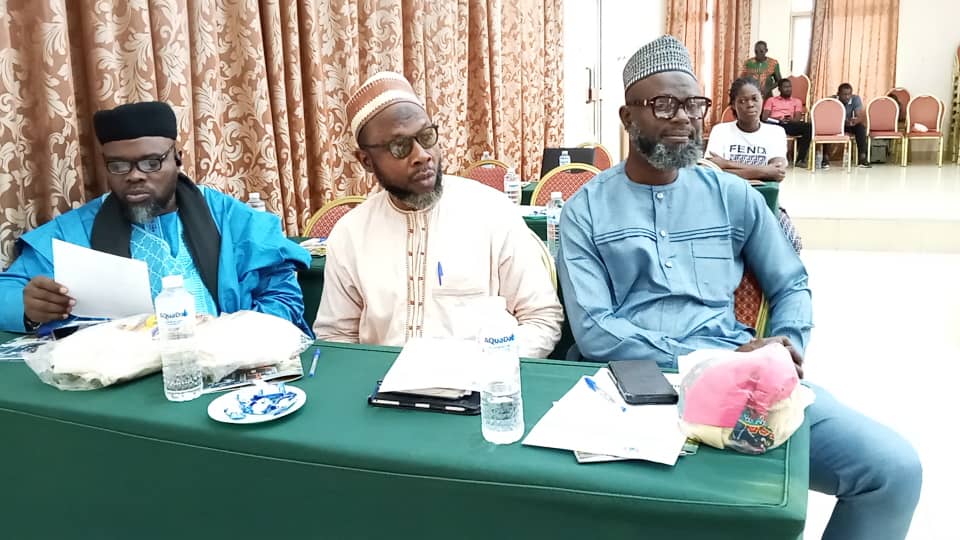
Mr. Richard Obeng Boafo, Head of the Religious Unit at the Ministry of Local Government, Chieftaincy and Religious Affairs, described the gathering as more than a ceremonial meeting, stressing it was a decisive call to action. He noted that faith-based leaders and traditional authorities remain custodians of culture and moral values, whose influence is critical in shaping attitudes and behaviours within communities.
Organisers emphasised that harmful practices, often justified through distorted interpretations of culture and religion, continue to undermine human dignity. The workshop therefore sought to deepen participants’ understanding of gender and social norms and to strengthen the capacity of religious leaders to actively confront practices that fuel GBV and child marriage.
Participants expressed appreciation to UNFPA for its continuous support in promoting gender equality and child protection in Ghana. The collaboration between UNFPA and MLGCRA was highlighted as a strong partnership aimed at addressing issues that threaten the nation’s social fabric.
Although Ghana’s reported cases of GBV and child marriage may appear relatively lower compared to some countries in the sub-region, participants acknowledged that the situation remains troubling and requires urgent and sustained action.
Faith leaders were encouraged to use their sermons, teachings, and daily engagements to speak boldly against violence, injustice, and harmful social norms. Their voices, organisers noted, have the power to mobilise communities, inspire change, and protect vulnerable groups, particularly women and children.
Speaking on behalf of the Chief Director of the Eastern Regional Coordinating Council (ERCC), Mr. Yaw Adu Asamoah, Mrs. Stella Someah-Kwaw, Assistant Director at the ERCC, warmly welcomed participants and reaffirmed the Ministry’s commitment to the fight against GBV and child marriage.
“This gathering is not just another meeting—it is a call to action,” she said. “The fight against Gender-Based Violence and child marriage is not only a government priority, but a moral and spiritual imperative. Faith leaders play a unique role in shaping values, guiding communities, and inspiring positive change.”
She further expressed gratitude to UNFPA for its steadfast partnership, noting that the collaboration seeks to bridge the gap between policy and practice, faith and civic responsibility, to ensure that every child in Ghana grows up free from violence and coercion.
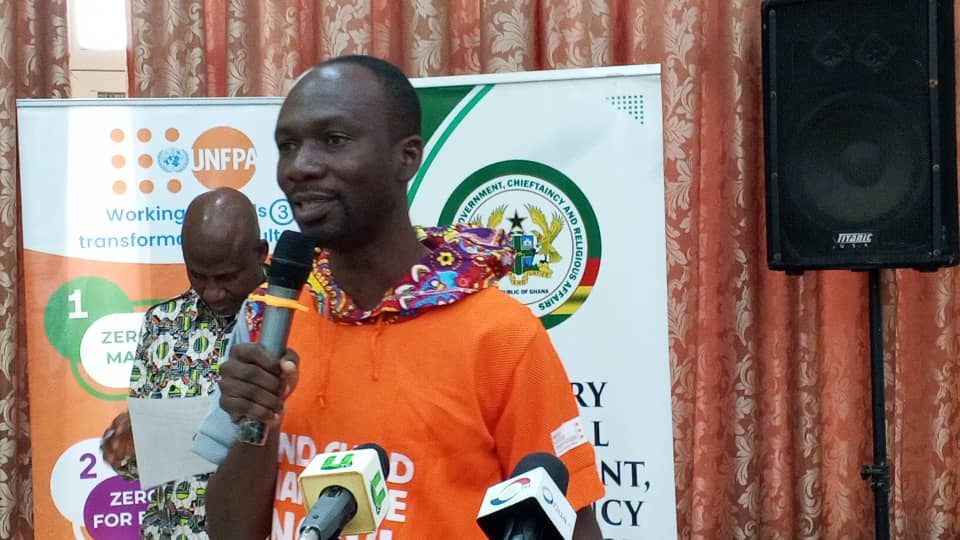
Also addressing the gathering, Mr. Bawa Faisal, National Programme Analyst for Gender and GBV at UNFPA, explained that the programme was organised after years of interventions yielded results that were “not encouraging enough.”
He noted that despite repeated efforts to address GBV, child marriage, and teenage pregnancy, the challenges persist, prompting UNFPA and the Ministry to re-strategise by engaging faith leaders directly.
“Religious leaders live and work closely with people at the community level. When they are engaged and empowered, they can effectively carry the message into churches, mosques, and homes, helping to reduce these harmful practices,” he said.
The engagement ended with a collective commitment by participants to speak out against GBV and child marriage in churches, mosques, shrines, and community gatherings; to commitment by participants to speak out against GBV and child marriage in churches, mosques, shrines, and community gatherings; to collaborate with government and civil society organisations at the grassroots level; and to promote accountability for sustainable impact.
Organisers expressed optimism that strengthened collaboration and renewed commitment would help Ghana build a society where no child is forced into marriage and where faith serves as a force for justice, dignity, and liberation.
Source:Mybrytfmonline.com/Amuzu Priscilla