

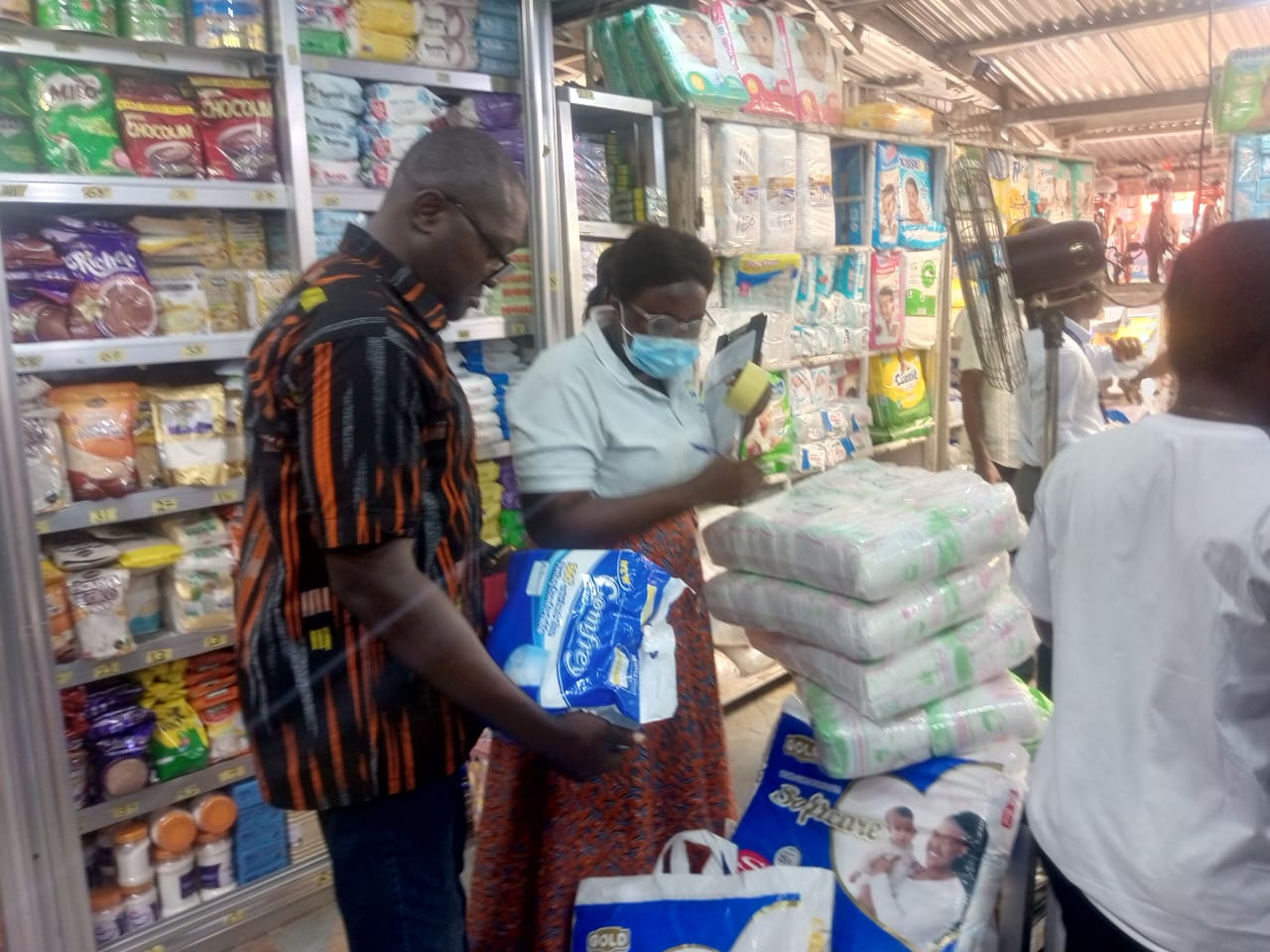
Officials from the Food and Drugs Authority (FDA) and the Consumer Protection Agency have launched a major operation in the Eastern Region aimed at removing substandard, expired, and fake baby diapers from the market.
According to both agencies, these dangerous products pose serious health risks to infants and unsuspecting consumers.
The exercise follows weeks of intelligence gathering, market surveillance, and laboratory testing of several diaper brands. The tests results revealed that many of the products failed to meet required safety standards, with some containing harmful contaminants capable of causing infections in babies.
Officials from the FDA and CPA described the situation as alarming, warning that the rising presence of fake and defective diapers on the market threatens public health, especially the health of infants who are more vulnerable to these risks.
The Eastern Regional Director of the FDA, Ms. Anita Owusu-Kuffour, cautioned the public to remain vigilant when purchasing baby diapers.Her warning followed a major enforcement operation during which unregistered and tampered diaper products were seized from various markets.
Ms. Owusu-Kuffour noted that many citizens misunderstand the FDA’s presence in markets, often assuming officials are there to confiscate their goods. She clarified that the Authority’s current operations focus specifically on baby diapers, which fall under strict national regulations.
She emphasized that the law requires every product—including diapers—to be vetted and approved by the FDA before being allowed onto the market. Manufacturers or traders who bypass this process, or alter an already approved product, violate FDA regulations.
According to her, the FDA maintains a comprehensive database of all legally registered products. During their surveillance, officers discovered diapers that were unregistered, expired, repackaged without authorization, improperly labeled, or physically compromised. These products were immediately removed from the market.
Ms. Owusu-Kuffour also described the poor and unhygienic conditions under which some rejected diapers had been repackaged. In some cases, handlers used their hands and feet to press or repackage the products—a practice that poses serious health risks, particularly to baby girls who are more prone to infections.

She urged the public to always check for key details such as the FDA registration number, proper labeling, expiry date, and usage instructions before purchasing any product. Even if a product appears properly labeled, she advised consumers not to buy it if its physical condition seems suspicious or compromised.
Ms. Owusu-Kuffour concluded by encouraging both sellers and consumers to prioritize hygiene and safety, stressing that the FDA’s primary concern is to protect public health and ensure the wellbeing of all Ghanaians, especially infants.
Source:Mybrytfmonline.com/Amuzu Priscilla