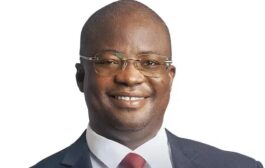


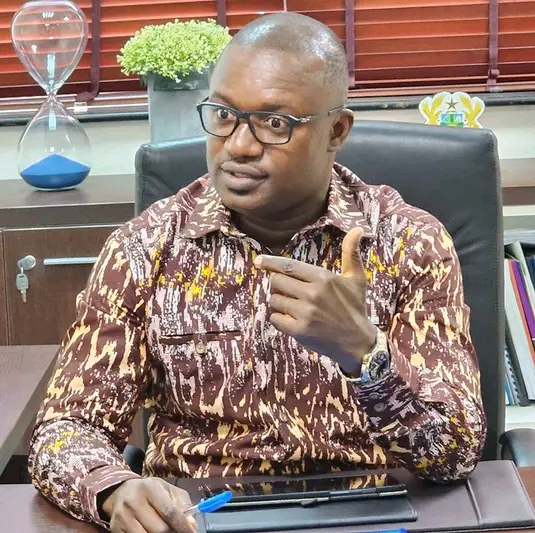
The Minister for Energy and Green Transition, John Jinapor, has laid the blame for the collapse of the controversial Power Distribution Services (PDS) deal squarely at the feet of what he called “greedy individuals,” accusing them of derailing an otherwise promising reform through selfish interests and political meddling.
Speaking at the Government Accountability Series in Accra on Wednesday, July 16, 2025, Mr. Jinapor clarified that the concept of private sector involvement in Ghana’s power distribution was sound—but its execution under the PDS deal was fatally flawed.
“PDS was not a bad model for private sector participation. The real problem was that a few greedy individuals chose to cannibalise the process and divvy up shares for themselves,” the Minister said.
Mr. Jinapor noted that despite its troubled path, the PDS model initially boosted revenue for the Electricity Company of Ghana (ECG), proving that with proper oversight and transparency, private sector involvement can yield real results.
“If they had followed what we’re doing now—value-for-money audits, open competition, and minimal political interference—we could have turned the corner,” he added.
Reassuring the public, Mr. Jinapor promised that future private partnerships with ECG would be guided by transparency, accountability, and fairness, without the political share-grabbing that sank PDS.
“I’ve assured everyone: no political involvement in shareholding this time. We’re doing this the right way,” he insisted.
Background: The Rise and Fall of PDS
The PDS Ghana Limited deal was meant to reform Ghana’s power sector by allowing the private company to manage ECG for 25 years. Signed in March 2019 under President Nana Addo Dankwa Akufo-Addo’s government, the concession quickly ran into trouble when PDS was found to have submitted fraudulent insurance guarantees as financial security.
The fraudulent documents, issued by Al Koot Insurance and Reinsurance of Qatar, included forged signatures and fake letters. Investigations revealed Al Koot lacked both the legal capacity and financial standing to issue the required guarantees. The fallout led to the cancellation of the deal in July 2019.
The collapse also triggered the suspension of $190 million in funding from the U.S. government’s Millennium Challenge Corporation (MCC), money that was expected to strengthen Ghana’s energy infrastructure.
Mr. Jinapor’s remarks now cast a fresh spotlight on one of Ghana’s most infamous energy sector failures—this time with a firm pledge that history will not repeat itself.
Source:Mybrytfmonline.com/Amuzu Priscilla.