

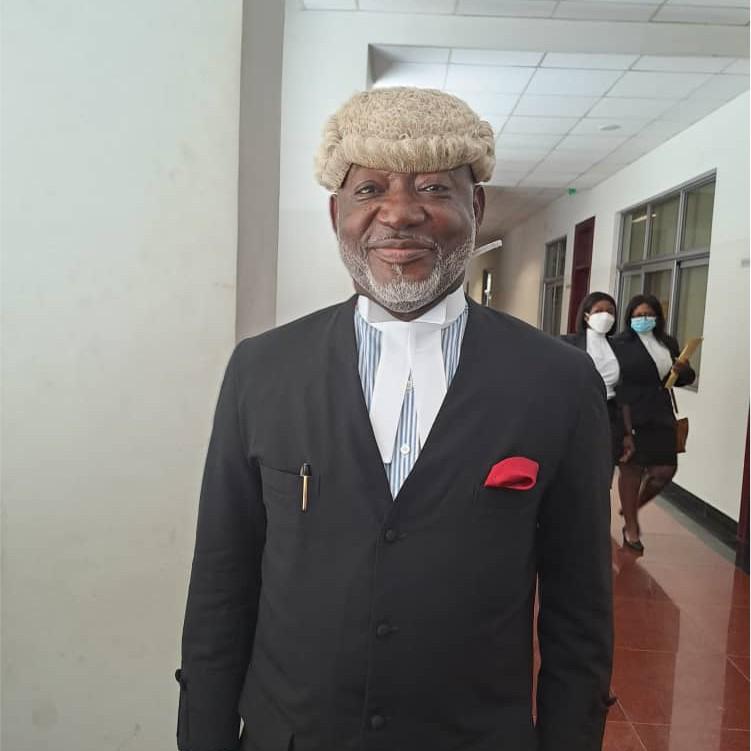
Lawyer Charles Owusu Juanah has emphasized that the National Cathedral Board is backed by a legal trust structure, which limits government control over its operations. “The government cannot dissolve the board unless it takes the matter to court and the court rules in its favor,” he stated. He clarified that contrary to public claims, the board has not been dissolved. “Anyone claiming the board has been dissolved is simply not telling the truth.”
He noted that political tension escalated during the lead-up to the 2024 elections, turning the Cathedral issue into a partisan debate between the two major political parties.
Lawyer Juanah, the official attorney for the Board pointed specifically to Hon. Samuel Okudzeto Ablakwa, Member of Parliament and a vocal critic, for making claims about a payment of GHS 2.6 million to Prophet Victor Kusi Boateng.
Addressing the controversy, Lawyer Juanah explained that Prophet Kusi voluntarily provided GHS 2.6 million to support the construction of the Cathedral. “That money was later refunded to him by the board after going through full approval processes. It wasn’t shared among individuals as alleged,” he said. “The documentation clearly shows that it was a board-approved reimbursement. Prophet Kusi did not earn interest on that money—it was simply repaid to him.”
Regarding the alleged mismanagement of Mobile Money (MoMo) donations, Juanah admitted that not all funds were successfully received. “Out of the total MoMo donations, about GHS 49 million was never successfully transferred, and only GHS 750,000 actually came through. So is it true or false that funds were squandered? These are the facts.”
He urged the public to speak based on verified information and documents rather than speculation or misinformation. “If you’re going to speak about the Cathedral, don’t do so from a place of ignorance. Get the facts. Speak with knowledge and documentation—just like I’m doing right now.”
Finally, he addressed issues surrounding the management reports and audit processes. “A management report is first presented to those conducting the audit. If there are questions, they are addressed before the final audit report is prepared. So, taking one side of the report—without including the responses and clarifications—leads to misunderstandings.”
Source:Mybrytfmonline.com/Amuzu Priscilla