

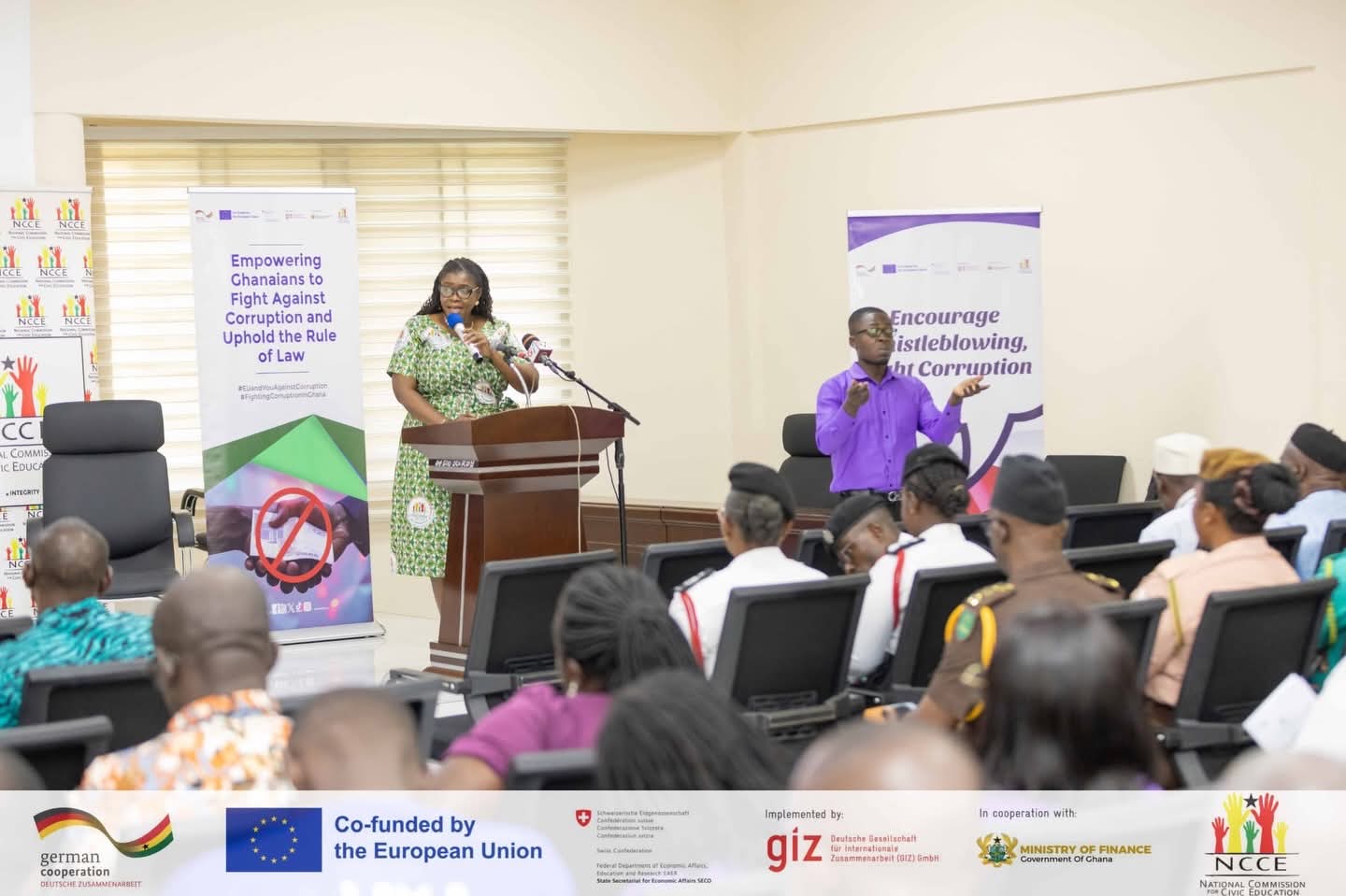
The National Commission for Civic Education (NCCE) has organized a regional citizen engagement in Koforidua aimed at strengthening local accountability and promoting adherence to the rule of law.
The forum forms part of the project, “Civic Engagements on the Rule of Law and the Fight Against Corruption,” being implemented under the Participation, Accountability and Integrity for a Resilient Democracy (PAIReD) programme. The initiative is supported by BMZ, the European Union, SECO, GIZ, and Ghana’s Ministry of Finance, and seeks to reinforce democratic resilience across the country.
Addressing participants at the Eastern Regional dialogue on Wednesday, February 25, 2026, the Chairperson of the National Commission for Civic Education, Kathleen Addy, underscored the central role of the rule of law and public accountability in democratic governance.
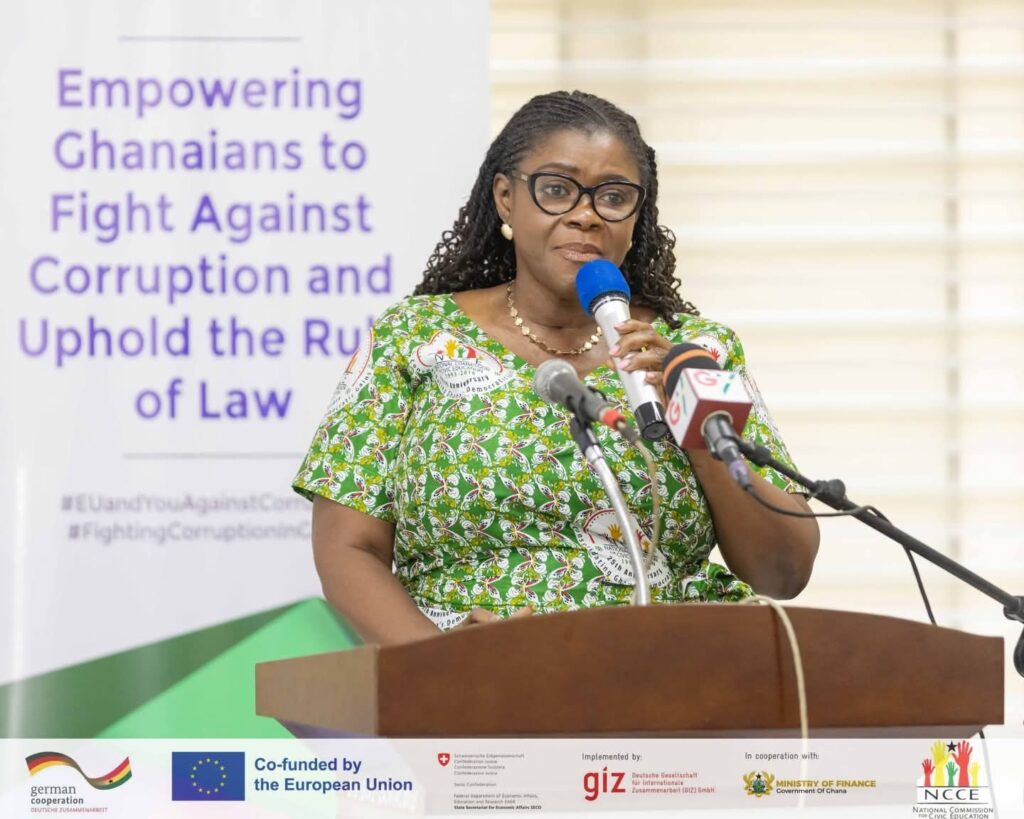
She noted that the rule of law shapes fairness in public service delivery, guarantees citizens’ access to information and lawful redress, and determines how transparently and respectfully public institutions respond to the people.
“When laws are clear and fairly applied, and when citizens understand both their rights and responsibilities, public trust grows, accountability deepens, and democracy is strengthened,” she stated.
However, Ms. Addy acknowledged that at the regional and district levels, many citizens still struggle to access information, navigate legal processes, and effectively engage public institutions. She warned that these gaps weaken accountability and reduce public confidence in governance systems.
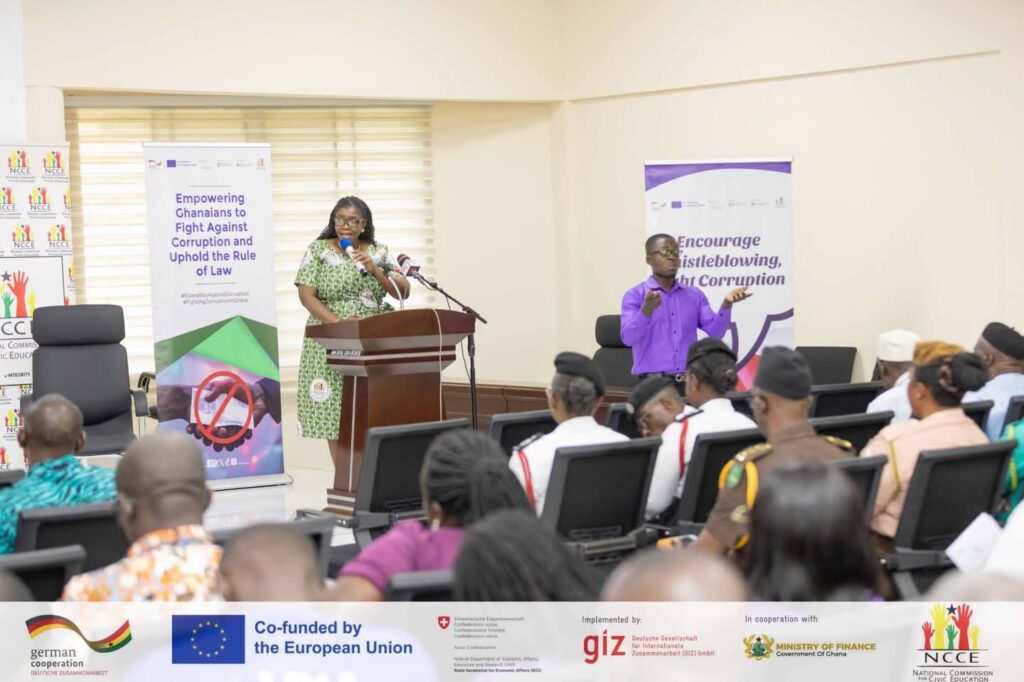
She added that Ghana continues to face corruption challenges, stressing that progress depends on both responsive institutions and well-informed citizens. For that reason, she said, civic education and sustained public dialogue remain essential.
According to her, the regional dialogue was convened to provide a neutral and practical platform for citizens, local stakeholders, and accountability institutions to interact. The objective, she explained, is to clarify reporting channels, strengthen trust in lawful processes, and promote responsible civic participation in transparent governance.
“Our theme, ‘Strengthening Local Accountability through Citizen Engagement,’ is timely and deeply relevant. Accountability is strongest when citizens and institutions engage in good faith, with honesty and mutual respect,” she affirmed.
Ms. Addy reiterated the NCCE’s commitment to promoting constitutionalism, civic responsibility, and democratic participation. She encouraged citizens to stay informed, engage lawfully, and make use of existing accountability mechanisms, while urging public institutions to remain open, responsive, and transparent.
She further advised participants to take advantage of the question-and-answer session to share experiences, raise concerns responsibly, and offer practical suggestions. The dialogue, she said, builds on the 2025 National Dialogue held in Accra and brings the conversation closer to local governance realities where accountability is experienced in everyday life.
Ms. Addy expressed appreciation to development partners, particularly GIZ and the European Union, for their continued support.
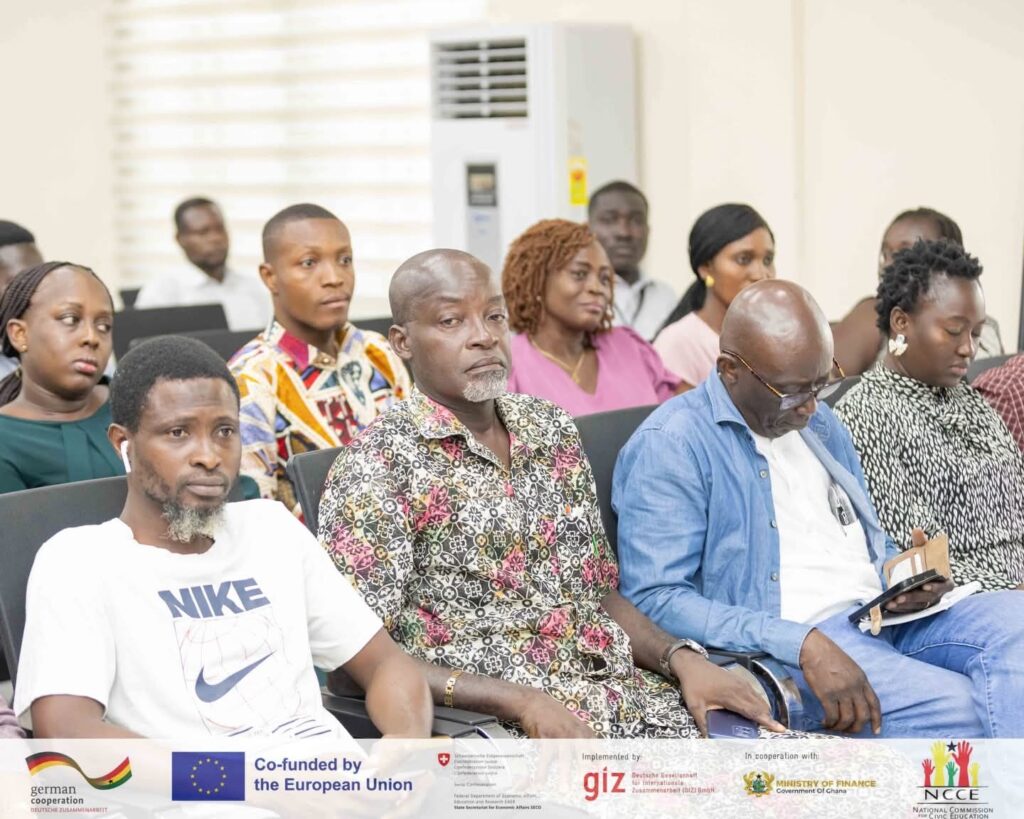
The Eastern Regional Minister, Rita Akosua Awatey on her part, described corruption at the local level as a major obstacle to development. She said it delays infrastructure projects, inflates costs, undermines service delivery, and weakens public trust in institutions.
According to her, tackling corruption requires more than enforcement; it demands prevention, vigilance, and collective responsibility. Oversight bodies must be empowered to perform their duties effectively, while public officials must demonstrate integrity in decision-making and implementation.
She emphasized that accountability cannot thrive without active citizen participation. Citizens, she noted, must contribute meaningfully to development planning discussions, monitor projects, seek information through lawful channels, and responsibly report suspected wrongdoing.
The Minister highlighted the critical roles played by traditional authorities, civil society organizations, faith-based institutions, and the media in strengthening integrity at the grassroots level. When these actors collaborate constructively, she said, accountability becomes a tool for development rather than division.
Hon. Awatey stressed the importance of sustained civic education to empower citizens with knowledge and confidence to engage constructively. At the same time, she urged public institutions to foster a culture of openness by proactively sharing information, simplifying procedures, and welcoming feedback.
“At the regional and district levels, accountability is not abstract. It is reflected in the condition of our roads, the quality of education, healthcare delivery, water systems, sanitation services, and community safety,” she stated.
She added that the credibility of government is measured by how responsibly public resources are managed and how responsive authorities are to citizens’ needs. She called for strict financial discipline, procurement compliance, ethical leadership, and participatory, data-driven development planning across the region.
The dialogue featured contributions from Mary Awelana Addah, Executive Director of Transparency International Ghana; Daniel Appiah, Lecturer at the University of Ghana Business School’s Department of Public Administration; and Michael Nkansah, Eastern Regional Director of CHRAJ. The session was moderated by Kafui Dey.
The engagement forms part of the NCCE’s broader mandate to educate citizens on their rights and responsibilities and to promote active civic participation in national development.
Source: Mybrytfmonline.com/Nhyiraba Solomon Nartey