

A nationwide campaign advocating the introduction of a Child Benefit Allowance Programme for every Ghanaian child by 2030 has been launched, with campaigners urging Government of Ghana to adopt a national social protection policy aimed at ending child poverty.
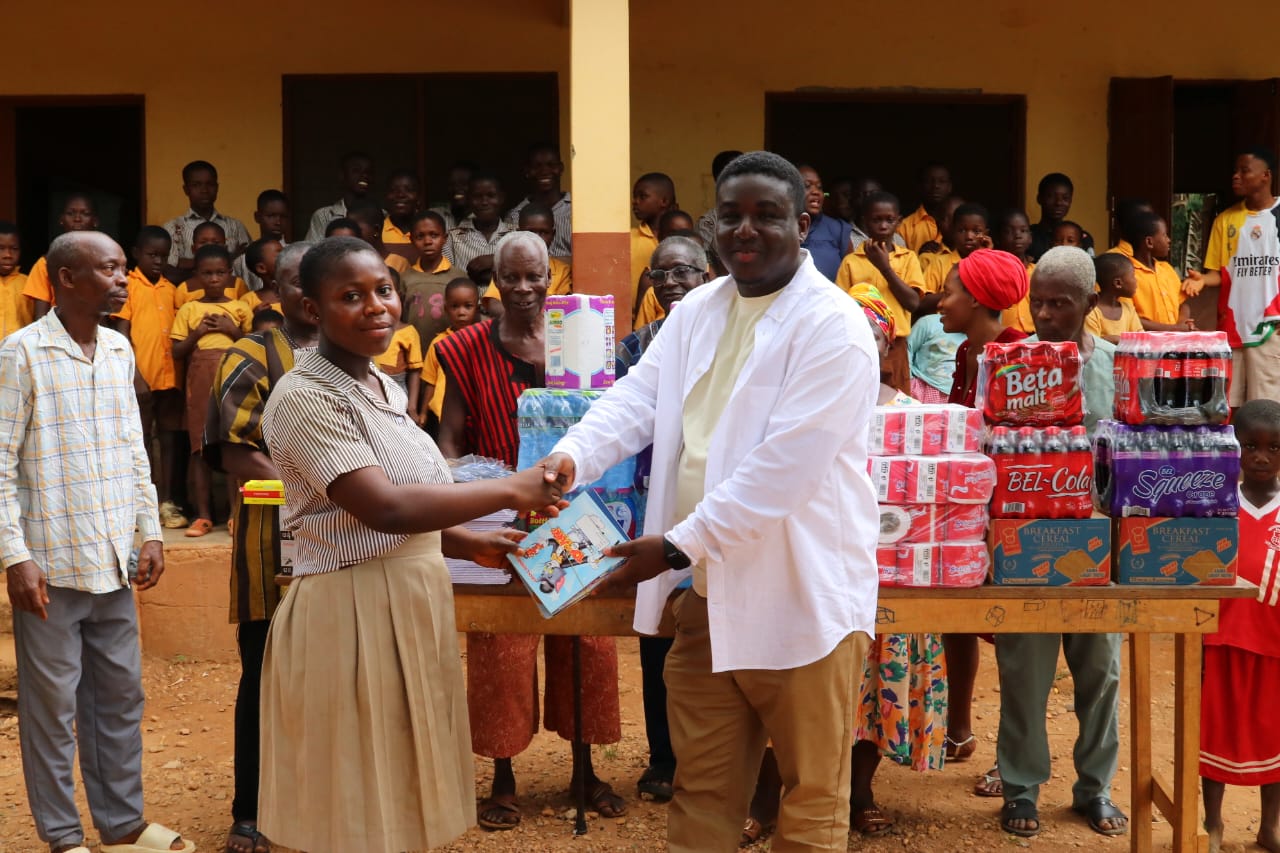
The campaign, spearheaded by Child Support Ghana ,an advocacy group under led by a UK based Ghanaian Journalist, Mr. Kwame Jones Jay-Jay, was officially launched on July 21, 2026, at Asafo Pechi M/A Basic School in the Abuakwa South Municipality of the Eastern Region during a donation exercise for vulnerable pupils.
As part of the launch, the group donated exercise books, pens, pencils, erasers, toiletries, marker pens, bottled water, soft drinks, and biscuits to support the educational needs of the pupils.
Launching the campaign, Mr. Kwame Jones said the proposed Child Benefit Allowance Programme seeks to provide every Ghanaian child with financial support to guarantee access to basic necessities, including nutritious food, healthcare, and quality education.
He explained that the campaign is intended to mobilise public support and influence national policy towards establishing a sustainable child benefit scheme by 2030 to address the growing challenge of child poverty.
According to him, recent UNICEF findings indicate that nearly 80 percent of Ghanaian children under the age of five experience multidimensional poverty, lacking one or more basic needs such as adequate nutrition, healthcare, education, safe drinking water, sanitation, or decent housing.
He further cited UNICEF estimates that about 3.65 million Ghanaian children live in poverty, while approximately 2.4 million children under five suffer severe food poverty, consuming fewer than five of the eight recommended food groups essential for healthy growth and development.
Mr. Jones noted that the consequences of child poverty are far-reaching, with one in every five children suffering stunted growth, many battling anaemia and preventable diseases, while nearly 28 percent of children live in monetary poverty without any national child income support to cushion vulnerable families.
He stressed that the situation is particularly severe in rural communities and parts of Northern Ghana, where inadequate healthcare, poor sanitation, food insecurity, and limited educational opportunities continue to trap many children in poverty.
Describing the proposed Child Benefit Allowance as a strategic investment rather than a welfare handout, Mr. Jones said supporting children today would produce a healthier, more educated and productive workforce capable of driving Ghana’s future development.
He called on the Government, Parliament, traditional authorities, development partners, civil society organisations, faith-based institutions and the private sector to support the establishment of a transparent and sustainable Child Benefit Allowance Programme by 2030.
He also appealed to traditional leaders, teachers, parents, students and the media to actively support the nationwide campaign and petition to ensure children’s welfare remains a national priority.
Mr. Jones expressed confidence that with strong political commitment and broad stakeholder support, Ghana could significantly reduce child poverty and provide every child with a fair start in life.
The advocacy group believes a national Child Benefit Allowance Programme would improve child nutrition, increase school enrolment and attendance, enhance access to healthcare, strengthen family resilience and help break the cycle of poverty affecting millions of children.
As part of the campaign, Child Support Ghana announced that it would embark on nationwide stakeholder engagements and a petition drive to build momentum towards the implementation of the policy by 2030.
Meanwhile, leaders of the Atwemamena community and the management of Asafo Pechi M/A Basic School endorsed the campaign by signing the petition in support of the proposed child benefit scheme.
The Assistant Headteacher of the school, Mrs. Christiana Nador, described child poverty in rural communities as a harsh reality.
“Many children come to school barefooted, without uniforms, exercise books or even food. Some attend classes on empty stomachs. This initiative, if implemented, will greatly improve the lives of children in rural communities and give them equal opportunities to succeed,” she said.
Source:Mybrytfmonline.com