


Ghana has reaffirmed its uncompromising commitment to the fight against money laundering, terrorist financing, and proliferation financing, describing the effort as a firm and irreversible national priority.
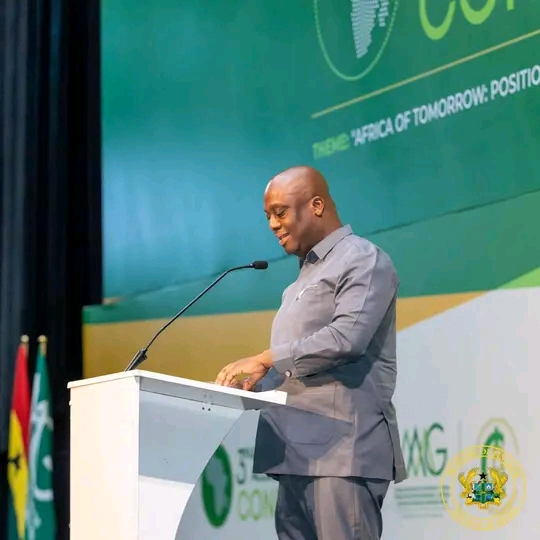
Speaking at the opening of the on-site Mutual Evaluation of Ghana’s Anti-Money Laundering, Counter-Terrorist Financing, and Counter-Proliferation Financing (AML/CFT/CPF) regime in Accra, the Deputy Minister for Finance, Hon. Thomas Ampem Nyarko, said Ghana has moved beyond policy declarations to concrete reforms and measurable outcomes.
According to him, the country’s commitment is driven not only by international obligations to bodies such as the Financial Action Task Force (FATF) and the Inter-Governmental Action Group against Money Laundering in West Africa (GIABA), but also by Ghana’s national interest and long-term economic stability.
“Ghana’s commitment to combating money laundering, terrorist financing, and proliferation financing is unwavering. It is rooted in our national interest and our responsibility to future generations,” Hon. Nyarko stated.
He stressed that protecting the integrity of the financial system is critical to maintaining investor confidence and shielding the economy from the damaging effects of organised crime.
The Deputy Minister noted that Ghana now uses its National Risk Assessment (NRA) as a practical tool to guide reforms, particularly in high-risk sectors such as the extractive industry and the rapidly expanding virtual assets space.
Key elements of the current strategy include enhanced inter-agency coordination through the Inter-Ministerial Committee on AML/CFT, improved intelligence-sharing among regulators, law enforcement agencies and the Financial Intelligence Centre (FIC), and a renewed focus on investigations, prosecutions and asset recovery.
Hon. Nyarko described the ongoing evaluation exercise as a partnership rather than an interrogation, assuring international assessors of Ghana’s transparency and institutional readiness.
The evaluation comes at a critical time, as Ghana seeks to consolidate gains made after exiting the FATF grey list in 2021. Government officials have warned that any reversal could result in higher borrowing costs, reduced foreign investment and reputational damage.
He concluded that Ghana’s position on financial crime remains firm, enduring and non-negotiable.
Source:Mybrytfmonline.com/Amuzu Priscilla