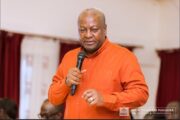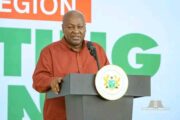


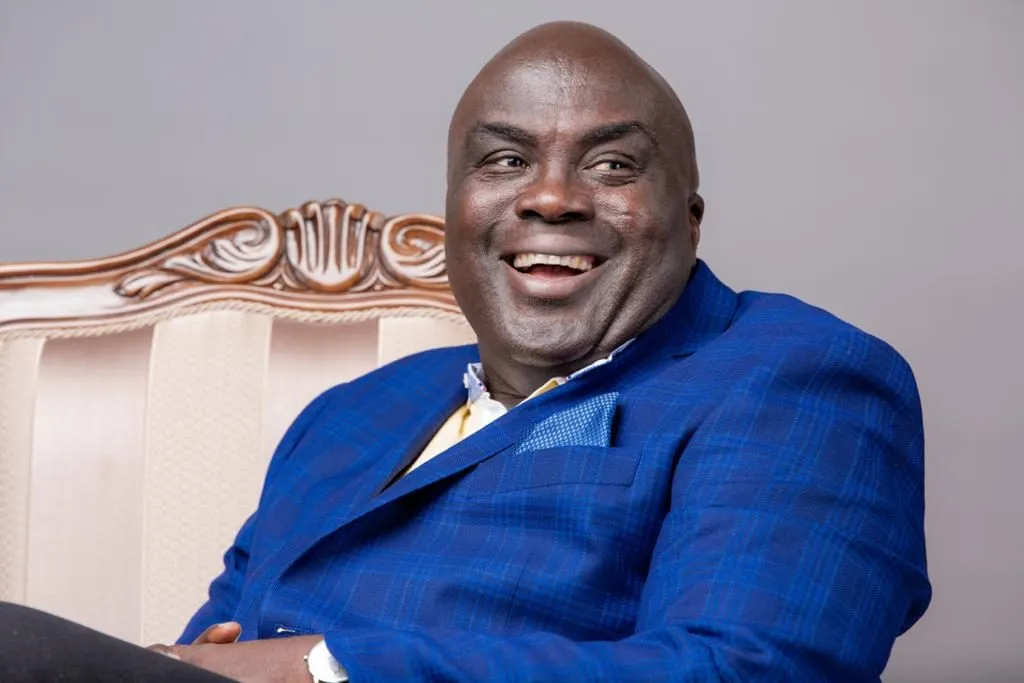
Chief of Staff Dr.Julius Debrah says the government’s 24-Hour Economy and Accelerated Export Development Programme will enable key sectors of Ghana’s economy to operate productively for extended hours, creating opportunities for businesses to expand and young people to secure decent work.
According to him, the initiative will cover critical sectors including factories, ports, farms, hospitals, markets and digital services as government seeks to increase productivity, domestic production and exports.
Dr.Debrah made the remarks on behalf of President John Dramani Mahama at the 26th General Assembly of the Presbyterian Church of Ghana at the Ramseyer Congregation in Abetifi, Kwahu, on Sunday, August 16, 2026.
He said the programme formed part of efforts to restore economic stability and livelihoods through disciplined public finances, increased domestic production, value addition and export development.
“Our task is to restore stability and livelihoods through disciplined public finances, domestic production, value addition and exports,” he said.
Dr.Julius Debrah explained that the 24-Hour Economy was intended to make productive use of extended operating hours across various sectors of the economy.
“The 24-Hour Economy and Accelerated Export Development Programme will help factories, ports, farms, hospitals, markets and digital services operate productively across extended hours, allowing enterprise to expand and young people to find honest work,” he stated.
Growth must improve lives
The Chief of Staff cautioned that Ghana’s economic renewal should not be measured solely by economic growth figures but by the extent to which ordinary citizens experience improvements in their livelihoods.
He said the benefits of development must reach farmers, apprentices, fisherfolk, traders, teachers and persons living with disabilities.
“Economic renewal cannot be measured by growth alone. It must reach the farmer in Afram Plains, the apprentice in Suame, the fisherfolk along our coast, the market woman in Bolgatanga, the teacher in a deprived community and the person living with disability,” he said.
Mr Debrah said government would continue to support skills development, apprenticeships, digital training, healthcare and Ghanaian enterprises as part of measures to build a productive economy.
Youth employment
He further identified youth unemployment and uncertainty as major challenges requiring urgent attention.
According to him, young people need more than warnings about the dangers of drugs, gambling, cybercrime and irregular migration.
“We must offer more than warnings: skills, mentors, capital, opportunity and belonging,” Dr. Debrah said.
He called on the Presbyterian Church of Ghana to deepen its contribution to technical education, entrepreneurship, counselling, addiction prevention and mentorship to complement government’s efforts.
Accountability and national development
Dr. Debrah also stressed the importance of accountability, transparency and integrity in public service, warning that corruption undermines public trust and weakens national institutions.
He said President Mahama’s administration remained committed to ensuring that public resources were used in the interest of citizens.
“Public resources belong to the people. Accountability must never be selective, and justice must never depend on political affiliation. Public service is a trust, and every trustee must be answerable.”
He also urged Ghanaians to protect the country’s peace while allowing room for constructive criticism and democratic accountability.
“The journalist who questions government is not an enemy of the state, and peaceful protest is a constitutional right,” he said.
The address was delivered under the theme “Celebrating Our Heritage: Building on the Foundation Already Laid.”
Dr. Debrah urged the Church, government, traditional authorities, businesses and citizens to work together to address unemployment, environmental degradation, inequality and declining public trust.
He said Ghana’s future would depend on collective responsibility, integrity and a commitment to building institutions and an economy capable of creating opportunities for present and future generation.
Source:Mybrytfmonline.com