

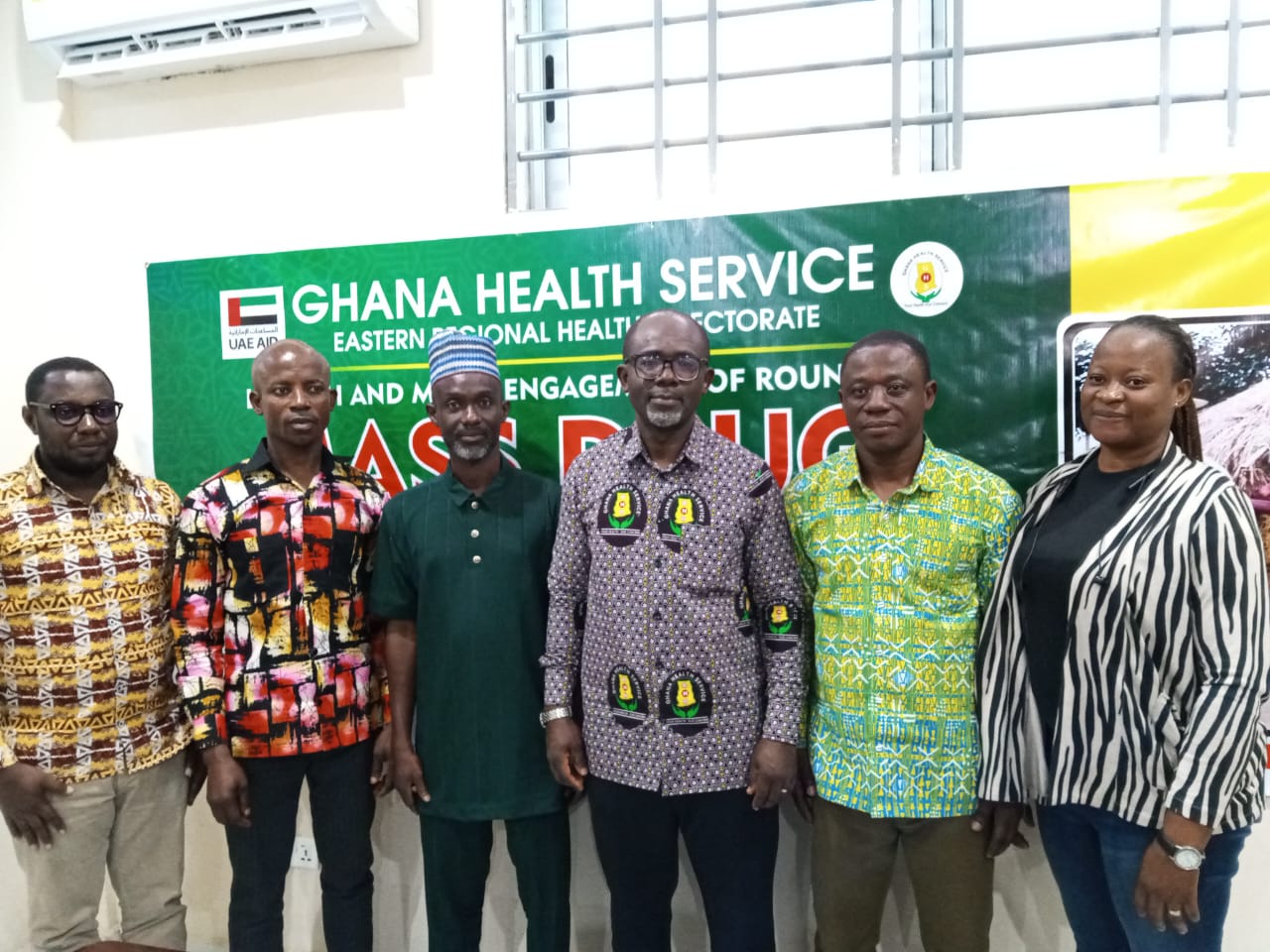
The Eastern Regional Health Directorate is targeting 134,774 people for the second round of the 2026 Mass Drug Administration (MDA) exercise against onchocerciasis, commonly known as river blindness.
Dr Moses Barima Djimatey, Eastern Regional Deputy Director in charge of Public Health, highlighted the intervention during a media engagement on the 2026 second-round Mass Drug Administration exercise.
The exercise, scheduled to take place from November 15 to 28, 2026, will cover 366 communities across four districts in the Eastern Region as part of efforts to eliminate the disease and prevent avoidable blindness.
The participating districts are Kwahu East, Kwahu Afram Plains North, Kwahu Afram Plains South and Ayensuano, with an estimated 168,467 people identified as being at risk of the disease.
The nationwide exercise will cover 15 regions and 86 districts, targeting approximately 6.3 million people living in communities affected by onchocerciasis.
As part of the intervention, trained health workers and community volunteers, known as Community-based Drug Distributors (CDDs), will undertake house-to-house distribution of ivermectin tablets to eligible residents.
The medication will be administered according to individuals’ height, with eligible community members encouraged to take the tablets immediately as directed by the trained distributors.
Onchocerciasis, also known as river blindness, is a parasitic disease caused by Onchocerca volvulus and transmitted through the bites of infected blackflies that breed near fast-flowing rivers.
The disease can cause intense itching, skin changes, including a condition commonly referred to as leopard skin, and visual impairment that may lead to permanent blindness.
The Directorate explained that Mass Drug Administration remains a major strategy for eliminating the disease, alongside community health education and sensitisation.
The exercise seeks to interrupt disease transmission, reduce illness, prevent disabilities such as blindness and strengthen existing healthcare services.
However, pregnant women, children below 90 centimetres in height, mothers breastfeeding babies less than one week old, and persons who are seriously ill are excluded from the treatment.
The Directorate has urged beneficiaries to report any adverse reactions following the administration of the medication to community drug distributors or the nearest health facility.
It has also called on District Assemblies, Assembly Members, religious leaders, traditional authorities and other opinion leaders in the beneficiary communities to support public education, awareness creation and mobilisation efforts.
The Directorate stressed that active community participation in the second round of the intervention is essential to achieving the required treatment coverage and eliminating river blindness from affected communities.
The Eastern Region is among areas in Ghana affected by neglected tropical diseases, with onchocerciasis being one of several conditions requiring sustained public health interventions.
Source:Mybrytfmonline.com