

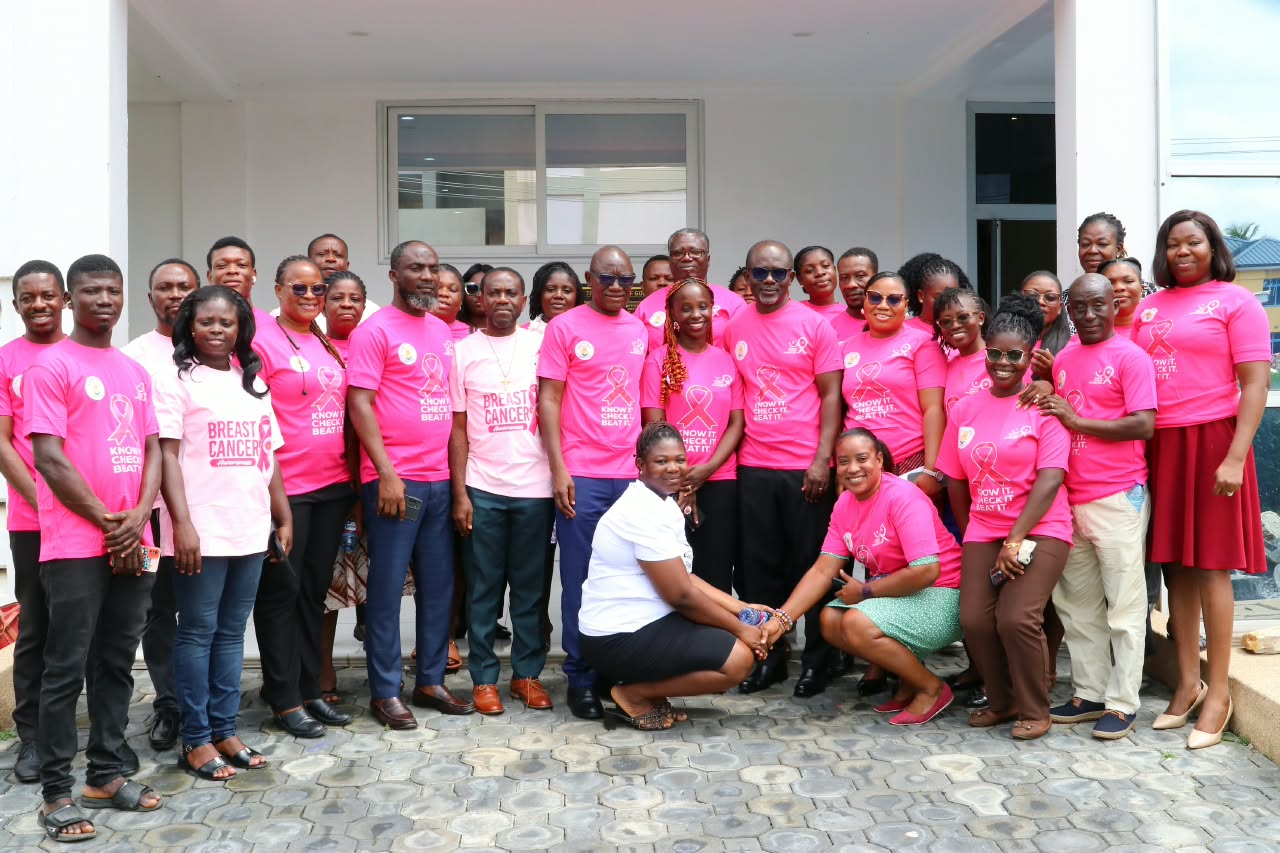
The Eastern Regional Health Directorate has launched the 2026 Breast Cancer Awareness Month campaign, urging women to prioritise early screening and seek prompt medical attention to improve their chances of surviving the disease.
The campaign, launched across all 33 districts of the Eastern Region, is being observed under the theme “Early Action, Better Outcome”, with a focus on early detection, public education and addressing misconceptions that prevent women from accessing healthcare.
Eastern Regional Director of Health Service, Dr Damien Punguyire, who launched the campaign Wednesday October 21,2026 called on women aged 30 and above to take advantage of screening opportunities during the month, while urging anyone with breast-related complaints to seek medical attention regardless of age.
“Breast cancer can be treated, especially when found early. Do not wait,” he said during a press briefing to announce the regional campaign.
Dr Punguyire said Ghana records approximately 5,000 breast cancer cases among women annually, with nearly 2,000 deaths, while six or seven out of every ten women reportedly arrive at health facilities late, when treatment becomes more difficult and survival prospects are poorer.
He said the statistics highlight the need for stronger public education and early detection to prevent avoidable deaths.
The regional director expressed concern over a decline in recorded breast cancer cases in the Eastern Region, cautioning that the trend should not be interpreted as evidence that the disease is reducing.
According to him, health facilities recorded 289 cases in 2023, 150 in 2024, 117 in 2025 and 99 cases as of June 2026.
“Someone hearing those figures may conclude that the problem is shrinking. I wish that were true, but I will not stand here and call it good news,” Dr Punguyire said.
“A falling number in a register is not the same as a falling disease. The more worrying explanation is that fewer women are being screened, examined and diagnosed.”
He warned that some women could be living with breast cancer without seeking medical attention, adding that the campaign would seek to identify women who have not yet accessed screening and diagnostic services.
He said an increase in recorded cases during the campaign could indicate that more women were being examined and diagnosed, rather than a worsening of the disease.
Dr Punguyire identified fear, shame, cost, distance and misinformation as some of the barriers preventing women from seeking early medical care.
He said beliefs that breast cancer is caused by curses or witchcraft, or that prayer and herbal remedies alone could cure the disease, needed to be addressed through sustained community education.
“Breast cancer is a disease. It is not a curse, and it is not spiritual punishment,” he stressed.
He added that the disease is not contagious and that people living with it require support rather than stigma.
“We are a people of faith, and no woman should be made to choose between her faith and her health. Prayer can comfort you. But delay in going to hospital is dangerous,” he said.
“So pray, and go. Do not pray alone. Do not take herbs alone.”
Women urged to check their breasts regularly
As part of the campaign, the directorate is encouraging women to become familiar with their breasts and report unusual changes to health professionals.
Dr Punguyire advised women to check their breasts monthly and seek medical assessment if they notice a new lump or thickening, changes in breast size or shape, skin dimpling, an inward-turning nipple, unusual discharge, rashes or persistent pain.
“Most lumps are not cancer. But only a health worker can tell you which is which,” he said.
He further urged men to support women in their families to access screening and treatment, while reminding the public that men can also develop breast cancer.
“Encourage her to go for screening, and walk with her to the facility,” he appealed.
The Eastern Regional Health Directorate plans to integrate breast health education and clinical breast examinations into outpatient departments, antenatal clinics, family planning services and child welfare clinics.
Community health teams will also organise health talks, public durbars and demonstrations on breast self-examination in communities across the region.
The directorate has further pledged to follow up on women referred for additional investigations to ensure they reach the appropriate facilities and receive support through diagnosis and treatment.
Residents have been encouraged to visit their nearest health facilities or Community-based Health Planning and Services (CHPS) compounds to enquire about breast examination and referral services.
Dr Punguyire said health workers would guide patients requiring specialised cancer care on possible support through the Ghana Medical Trust Fund, subject to confirmation of eligibility.
He cautioned that mammography is not available at every facility and advised women to consult their district or regional health directorates for information on the nearest available service.
The directorate will document the campaign’s activities and outcomes, including the number of women examined, referrals made and patients linked to treatment, and submit a report to the Public Health Division by November 6, 2026.
Source:Mybrytfmonline.com