

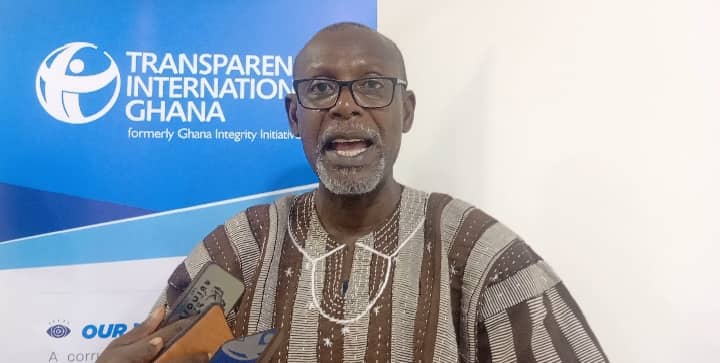
Transparency International Ghana (TI-Ghana), formerly known as the Ghana Integrity Initiative (GII), has organized a capacity-building workshop for Civil Society Organizations (CSOs) and media practitioners to address gender-related corruption in the Eastern Region of Ghana.
The training formed part of the Participation, Accountability, and Integrity for a Resilient Democracy (PAIRed) project, implemented in partnership with GIZ, BMZ, and the European Union (EU). The initiative seeks to strengthen social accountability and promote gender justice by empowering local actors to identify, report, and advocate against gender-based corruption.
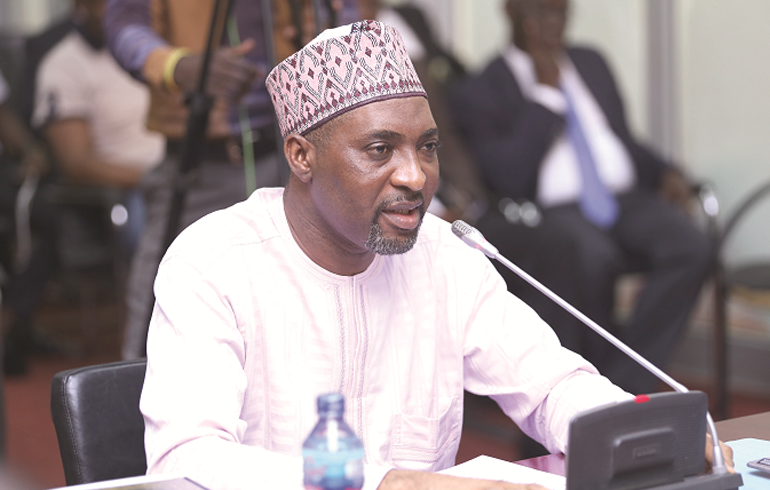
According to Mr. Michael Kwame Boadi, Fundraising Manager at TI-Ghana, corruption continues to undermine Ghana’s democratic and developmental progress despite the establishment of key institutions like the Office of the Special Prosecutor (OSP) and theCommission on Human Rights and Administrative Justice (CHRAJ).
He highlighted *sextortion as a particularly pervasive yet underreported form of corruption that disproportionately affects women and youth. “Sextortion is a serious form of corruption that mostly affects women and young people, yet many victims are unable to speak up due to fear, stigma, and power imbalances,” he said.
Referencing the2024 Corruption Perceptions Index (CPI), which scored Ghana 42 out of 100 TI-Ghana emphasized the urgency of tackling gender-related corruption, citing growing cases of sexual exploitation in workplaces, schools, and public institutions.
Participants were trained on the concept and forms of gender-related corruption, legal frameworks, advocacy tools, and ethical reporting techniques. The sessions also focused on strategies for documenting and raising public awareness of sextortion and other gender-based abuses.
Source:Mybrytfmonline.com/Amuzu Priscilla