

PRESS STATEMENT
IN MEMORY OF HER EXCELLENCY NANA KONADU AGYEMAN RAWLINGS
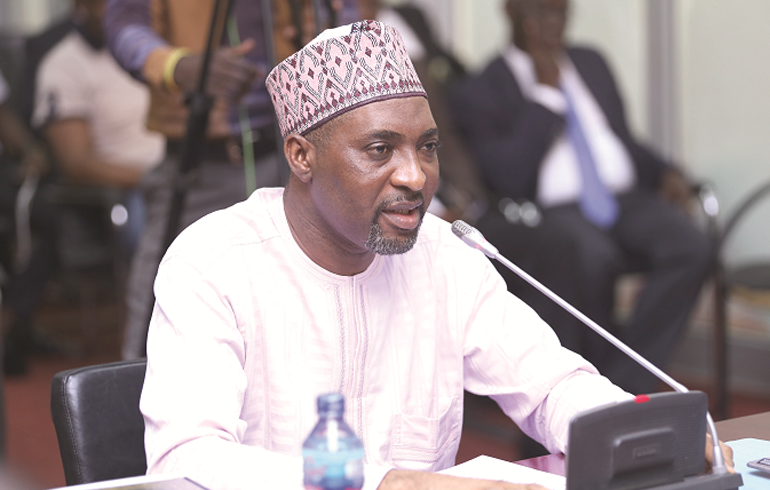
By Hajia Zuwera Mohammed Ibrahimah (MP, Salaga South) and Vice Chairperson, Gender, Children and Social Welfare Committee
October 27, 2025
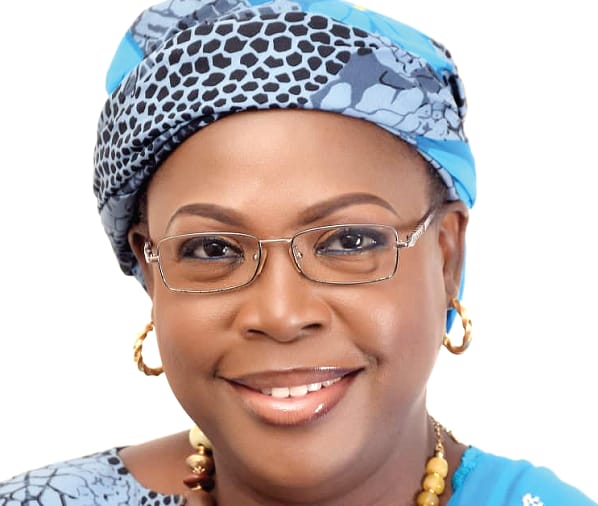
I issue this statement with a heavy heart but with profound gratitude, in memory of a remarkable woman whose life embodied courage, vision, and an unrelenting commitment to the empowerment of women and children — Her Excellency Nana Konadu Agyeman Rawlings, Ghana’s longest-serving First Lady, who passed away on Thursday, October 23, 2025, at the age of 76.
Born on November 17, 1948, in Cape Coast to Felicia and J.O.T. Agyeman, Nana Konadu was named after the revered Ashanti Queen Mother, Nana Konadu Yiadom II, who ruled during the exile of the Asantehene in 1896. From birth, her name carried the weight of leadership and resilience. Her mother, an educator who was compelled by colonial law to leave her profession upon marriage, instilled in her daughter an understanding of both the transformative power of education and the injustice of systems that restricted women’s potential. These early lessons shaped the course of Nana Konadu’s extraordinary life.
It was at Achimota School that she met Flight Lieutenant Jerry John Rawlings, beginning a lifelong partnership that would span nearly five decades and profoundly influence Ghana’s political and social landscape. Together, they raised four children — Dr. Zanetor Agyeman-Rawlings, the Honourable Member for Korle Klottey and my dear colleague, Yaa Asantewaa, Amina, and Kimathi — each a testament to her devotion as a mother and her belief in nurturing the next generation of leaders.
In 1982, Nana Konadu founded the 31st December Women’s Movement, not merely as an organization but as a national awakening. At a time when Ghana’s economy was struggling and women’s voices were largely excluded from national discourse, she travelled across the length and breadth of the country, engaging with chiefs, market women, and community leaders. She recognized that without the full participation of women — Ghana’s largest labour force — sustainable national development would remain out of reach.
Her vision was both radical and practical. Under her leadership, the Movement established more than 870 daycare centres and preschools across Ghana, enabling countless mothers to work and contribute economically while ensuring their children received early education. She championed micro-credit schemes, literacy programmes, and small-scale enterprises — from cassava processing and batik making to beekeeping and soap production — creating avenues for women to achieve financial independence and dignity.
Through her tireless efforts, Nana Konadu mobilized over two million women nationwide, transforming them into active participants in Ghana’s development. She boldly addressed sensitive issues such as family planning, trokosi, female genital mutilation, and child marriage — challenging deeply entrenched norms and advancing the rights of women and girls.
Her influence extended far beyond Ghana’s borders. At the 1995 Fourth World Conference on Women in Beijing, she declared that African women “must be present where power is exercised.” Her advocacy contributed to landmark legal reforms, including the 1989 Intestate Succession Law, which protected the inheritance rights of widows and children, and the integration of gender equality provisions into Ghana’s 1992 Constitution. She was instrumental in shaping policies on maternal health, women’s agriculture, and child welfare.
At the Beijing+5 Conference in New York in 2000, she reaffirmed her commitment, stating:
“My desire is to see the emancipation of women at every level of development to enable them to contribute and benefit from the socio-economic and political progress of the country. Women’s vital role of promoting peace in the family, the country and the world at large must be acknowledged.”
Her mantra was simple yet powerful — change begins with one woman who says “enough is enough,” one family at a time, and one generation after another.
In 2016, she made history as Ghana’s first female presidential candidate, breaking barriers and inspiring generations of young women to envision themselves as leaders. Though her National Democratic Party did not secure victory, her candidacy itself was a defining milestone in Ghana’s democratic journey.
Nana Konadu served as First Lady from 1979 and again from 1981 to 2001 — a period of transformative social and political change. She later became the First Vice Chairperson of the National Democratic Congress (NDC) in 2009, further demonstrating her leadership and political acumen. Her 2018 memoir, “It Takes a Woman,” chronicled her life’s journey and remains an inspiring blueprint for empowerment and social reform.
As we reflect on her life, we remember the millions of women whose lives were transformed by her work — the market women who built successful businesses, the children who benefited from early education, the widows who retained their property rights, and the young girls spared from harmful traditional practices.
Yet, as we celebrate her legacy, we must recognize that the struggle for gender equality continues. By current projections, full gender parity may not be achieved until 2158 — five generations from now. In one of her final public statements in March this year, Nana Konadu herself urged us to “accelerate action for gender equality.”
Her legacy must not remain a monument of the past but a living mandate for the future. As members of Parliament, and particularly as members of the Gender, Children and Social Welfare Committee, we bear the responsibility to advance her mission — to ensure more women are represented in leadership, to pass laws that economically empower women, and to challenge all forms of discrimination that limit their potential.
Ghana has lost a trailblazer. Africa has lost a visionary. But the flame Nana Konadu Agyeman Rawlings lit continues to burn — in every woman who stands taller, every child who dreams bigger, and every policy that protects the vulnerable.
To Dr. Zanetor, Yaa Asantewaa, Amina, and Kimathi, we extend our deepest condolences. Your mother was not only a mother to you but a mother to a nation. Her strength and compassion live on through you.
As she often said, “Here’s to strong women. May we know them, may we be them, and may we raise them.”
May the soul of Her Excellency Nana Konadu Agyeman Rawlings rest in perfect peace, and may her legacy continue to inspire generations to come.
Signed,
Hajia Zuwera Mohammed Ibrahimah (MP, Salaga South)
Vice Chairperson, Gender, Children and Social Welfare Committee
Parliament of the Republic of Ghana
Source:Mybrytfmonline.com