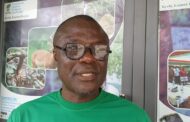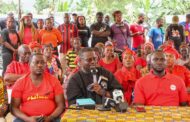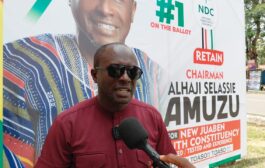


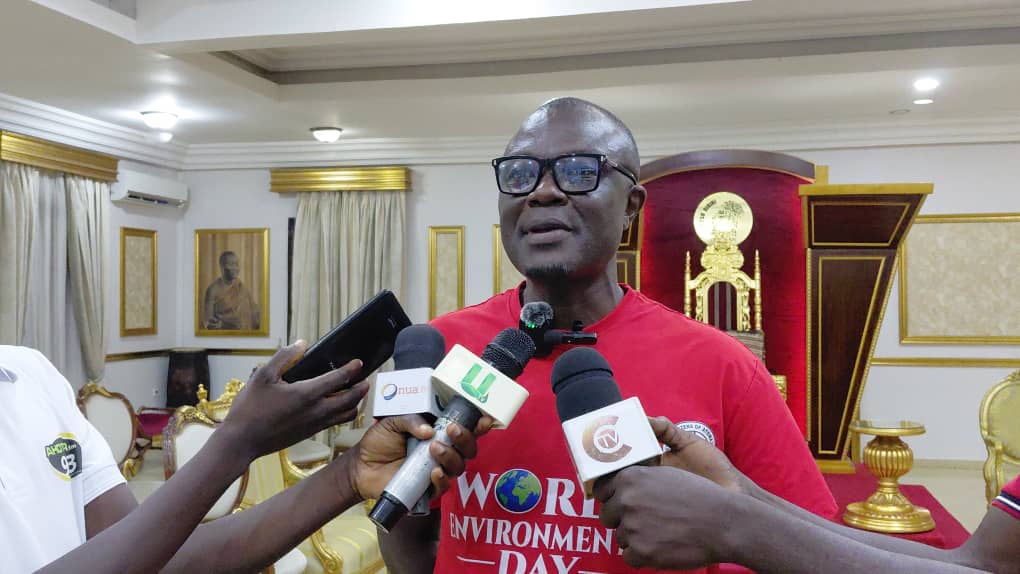
Mr. Paul Asumaku, Convenor of the Concerned Citizens of the Atewa Landscape (CCAL), has underscored the urgent need for stronger community-led governance to protect the Atewa Landscape from the devastating impacts of illegal mining and deforestation.
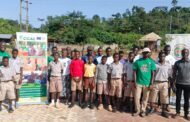
Speaking at a recent programme themed “Strengthening Community-Led Governance for Sustainable Minerals Management within the Atewa Landscape,” Mr. Asumaku emphasized the critical role of training community monitors.
The programme, sponsored by the European Union through A Rocha Ghana under the BRACE Project, forms part of broader efforts to promote sustainable environmental governance in communities surrounding the Atewa Forest.
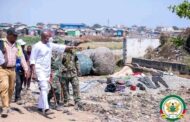
“These trained monitors will observe, document, and report activities that threaten our forests and water bodies,” he explained. He noted that illegal mining and indiscriminate tree felling are rapidly degrading the Atewa Forest and polluting major river systems, including the Birim, Densu, and Ayensu rivers.
Mr. Asumaku stressed the importance of sharing credible data gathered by these monitors with key state institutions such as the Minerals Commission, the Environmental Protection Agency (EPA), the Water Resources Commission, the Forestry Commission, and the Ministry of Lands and Natural Resources. According to him, timely reporting will ensure that the government remains fully informed about the deteriorating state of the forest and its water bodies.
“If urgent action is not taken, our water resources and mineral wealth could suffer irreversible damage,” he warned.
He further explained that community members are being equipped with the necessary skills to collect reliable and verifiable information, which can then be submitted to security agencies responsible for tackling illegal mining, popularly known as galamsey.
As part of CCAL’s ongoing commitment under the project, the organization will train landscape monitors, organize community–government engagement forums, and collaborate with key stakeholders across four selected communities out of the 53 communities surrounding the Atewa Landscape.
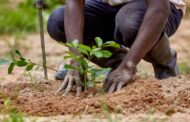
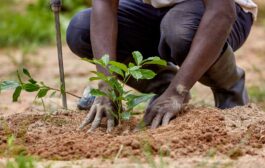
Mr. Asumaku also highlighted a restoration agenda aimed at reclaiming degraded lands and forest areas through tree planting exercises, particularly at Potroase. In addition, CCAL will actively engage the media to amplify awareness and drive national attention toward the crisis.
He noted that the monitors training workshop held today marks the first phase of the initiative and will be followed by community engagement forums with relevant state agencies.
Mr. Asumaku also suggested that declaring a state of emergency may be necessary, noting that the fight against galamsey has become increasingly difficult for government alone without stronger, coordinated interventions.
In addition, he proposed that individuals involved in illegal mining be identified, registered, and properly trained under the District Minerals Commission framework. This, he said, would help transition them into responsible, regulated mining practices using approved methods and licensed equipment.
“Many people believe galamsey has come to stay, but without immediate and decisive action, the consequences for our forests, water bodies, and mineral resources will be catastrophic,” he concluded.
Source:Mybrytfmonline.com