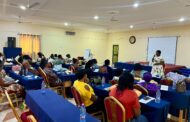


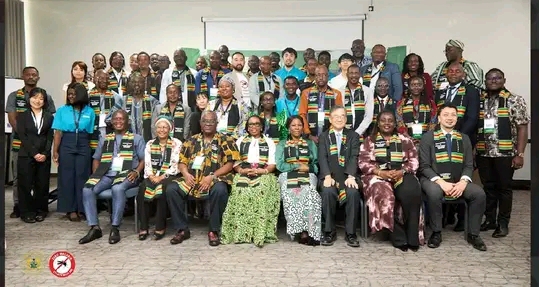
In a decisive step toward redefining malaria prevention across Africa, the Deputy Minister of Health delivered the keynote address at a high-level regional workshop on Tech-Enabled Larval Source Management (LSM), held at The Palms by Eagle Hotel in Accra.
The two-day summit, hosted by the National Malaria Elimination Programme (NMEP) of the Ghana Health Service in partnership with AGAMAL and SORA Technology, has brought together health leaders, technical experts, and innovators from across the continent. Under the theme “Prevention at the Source,” the workshop is advancing bold, technology-driven strategies aimed at eliminating malaria through smarter, data-informed interventions.
In her keynote address, the Deputy Minister underscored Ghana’s commitment to shifting from reactive treatment approaches to proactive prevention strategies that target mosquito breeding grounds before transmission occurs.
“If we are to end malaria, we must outpace it,” she stated. “Technology now gives us the power to predict, detect, and respond with precision. Prevention at the source is not just a strategy — it is our responsibility.”
The workshop showcased a revolutionary toolkit designed to transform larval source management across Africa, including:
• Drone Mapping and AI Detection – Harnessing aerial surveillance and artificial intelligence to identify mosquito breeding sites with unprecedented accuracy.
• Digital Micro-planning – Enhancing efficiency by allocating resources based on real-time, data-driven insights.
• Real-Time Monitoring Systems – Equipping field teams with instant data tools to enable rapid, targeted interventions.
The Deputy Minister commended the collaborative partnership between government institutions and technology innovators, emphasizing that malaria elimination requires cross-border cooperation, shared learning, and unified political will.
“This gathering demonstrated that Africa is not waiting for solutions — we are building them,” she noted.
The workshop served as a vital platform for continental knowledge exchange, reinforcing Ghana’s leadership role in advancing digital health transformation in malaria control. By convening experts and policymakers under one roof, the event highlights a future where malaria prevention is precise, technology-enabled, and community-centered.
The Ministry of Health reaffirms its commitment to supporting the National Malaria Elimination Programme and its partners as they translate innovation into measurable impact — moving Ghana and the continent closer to a malaria-free future.
Source:Mybrytfmonline.com/Kwabena Nyarko Abronoma