


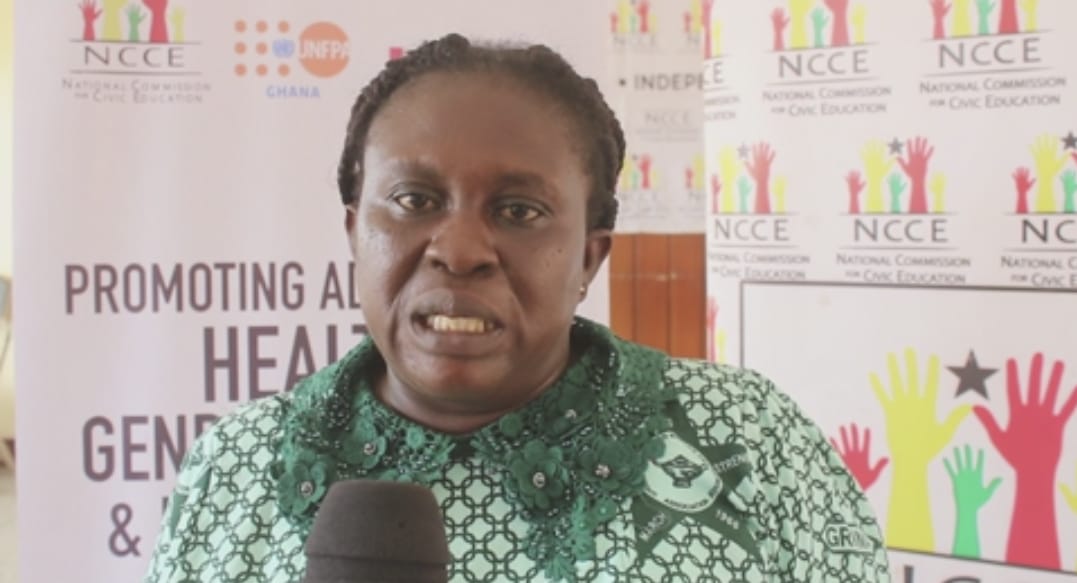
Public Health Nurse Edith Asiedua of the Eastern Regional Health Directorate has cautioned young women against the misuse of emergency contraceptives, warning that abuse could lead to serious health complications.
According to her, many young women are increasingly relying on pills such as Postinor-2 after every instance of unprotected sex, a trend she described as dangerous.
“Emergency contraceptives are designed for rare situations and must not be taken more than twice in a year. They are not meant to be used as a regular family planning method,” she stressed.
Madam Asiedua gave the advice during a programme organised by the National Commission for Civic Education (NCCE) in the New Juaben North Municipality of the Eastern Region.
The initiative, supported by the United Nations Population Fund (UNFPA), seeks to empower adolescent girls and young people to resist sexual abuse and gender-based violence.
Deputy Director at the NCCE Headquarters, Hagar Ampah, underscored the need to protect vulnerable groups, while Municipal Director of NCCE, Ebenezer Acheampong, reminded stakeholders of their constitutional responsibility to educate the public on civic rights and responsibilities.
“In New Juaben, defilement, rape, and gender-based violence are major issues affecting young people. These are criminal offences that must be reported to the police and not settled at home,” Acheampong said.
The programme created platforms for adolescents to engage health professionals on reproductive health, family planning, and the dangers of harmful cultural practices.
Adolescent pregnancy remains a concern in Ghana, with more than 100,000 cases recorded annually. The 2022 Ghana Demographic and Health Survey shows that 15% of girls aged 15–19 have been pregnant at least once—a situation that exposes many to health risks, stigma, and disrupted education.
Eastern Regional DOVSSU Director, Chief Inspector Monica Agyemang, also used the platform to remind the public that it is a criminal offence for anyone with a sexually transmitted infection (STI) to have sexual intercourse without disclosing their condition to their partner.
Stakeholders, including chiefs, queen mothers, pastors, imams, health workers, and security agencies, pledged to strengthen collaboration to protect adolescents, promote gender equality, and create safer spaces for young people to thrive.
Source:Mybrytfmonline.com/Kwabena Nyarko Abronoma