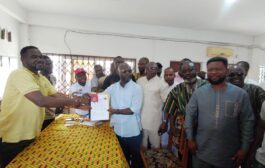



The transportation of large quantities of waste from Accra to the Adipa area of the Nsawam-Adoagyiri Municipality has sparked renewed debate over the balance between urban development, environmental sustainability and the protection of communities hosting waste-management facilities.
Minority Chief Whip and Member of Parliament for Nsawam-Adoagyiri, Frank Annoh-Dompreh, is demanding answers from government over the decision to transport waste from the national capital to the Eastern Region.
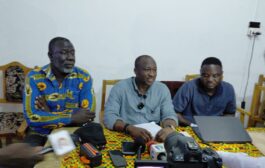
Addressing the media at Yaw Adipa/Asiyaw, Mr. Annoh-Dompreh questioned whether the decision forms part of a broader, sustainable development strategy for waste management or merely transfers Accra’s sanitation challenges to another community.
He said development should not be pursued in a manner that creates environmental and public-health concerns for communities receiving the waste.
According to the MP, affected communities should have been consulted before the exercise began, particularly because decisions involving waste disposal can have long-term implications for land use, public health, the environment and local livelihoods.
“There was no engagement. The chiefs and the people in that area were not engaged. The local assembly was not engaged. Assemblymen, the MP of the area, all the stakeholders were not engaged,” he said in earlier comments on the issue.
Mr. Annoh-Dompreh further linked the controversy to Ghana’s commitments under the Sustainable Development Goals, particularly SDG 11, which promotes inclusive, safe, resilient and sustainable cities and communities.
He questioned whether the current approach to waste evacuation adequately reflects those development principles.
“What has changed? What has changed?” he asked, challenging government to explain the policy considerations behind transporting large quantities of waste from Greater Accra to the Eastern Region.
Residents Demand Development-Friendly Waste Management
The Assembly Member for the Yaw-Adipa Electoral Area, Emmanuel Asamoah, said residents were concerned that the increasing volume of waste could undermine the environmental conditions necessary for sustainable development in the community.
He alleged that residents had been exposed to unpleasant odours, pests and uncovered waste, while runoff from the site during rainfall had raised concerns about drainage and possible groundwater contamination.
The allegations have not been independently established through a published environmental or health assessment.
Mr. Asamoah said the community’s concerns went beyond the immediate presence of waste and included the potential long-term effects on property values, public health, security and the general quality of life.
He stressed that residents were not opposed to waste management but wanted an approach that protects communities while addressing the country’s sanitation challenges.
Five Demands for Sustainable Development
The community has presented five demands aimed at addressing the situation.
They include an immediate suspension of dumping activities, an independent environmental and health impact assessment, comprehensive cleanup and decontamination of affected areas, improved security and surveillance around the facilities, and a public forum within seven days to discuss a long-term waste-management strategy.
Mr. Asamoah issued a seven-day ultimatum to the relevant authorities to respond to the demands.
He warned that residents could consider lawful measures to prevent access to the dumping sites if their concerns were not addressed.
Mr. Annoh-Dompreh, however, urged residents to ensure that any action taken remained within the law.
Waste Management as a Development Challenge
The Adipa controversy highlights the wider challenge Ghana faces in managing rapidly growing urban waste while ensuring that development does not create new environmental burdens for communities.
The ongoing national waste-evacuation exercise is intended to address accumulated waste in parts of Accra, including Agbogbloshie. However, the transportation of the waste to other regions has raised questions about the distribution of environmental responsibilities and the need for adequate infrastructure at receiving sites.
For Mr. Annoh-Dompreh, the issue is therefore not simply about where Accra’s waste should be dumped, but about the kind of waste-management system Ghana wants to build.
He is calling for government to engage residents, traditional authorities, local assemblies and other stakeholders to develop a long-term solution that addresses sanitation challenges while protecting the environment and supporting sustainable community development.
Source:Mybrytfmonline.com