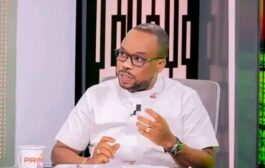


A member of the New Patriotic Party’s (NPP) National Communications Team, Clinton Baffour Banning, has attributed the delay in assenting to Ghana’s anti-LGBT bill to political maneuvering and legal challenges, insisting the debate predates recent election cycles.
Speaking on Bryt Adekyee Mu Nsem with Kwamina Sam Biney, Mr. Baffour Banning stressed that public discourse around LGBT issues in Ghana is not new.
“The point we need to correct is that the conversation about LGBT did not start today,” he said. “This has been an ongoing national discussion for years.”
He explained that the NPP had taken a firm stance against LGBT activities as far back as 2017, referencing efforts led by party figures such as John Ntim Fordjour.
“As far back as August 2017, our elders made it clear that we will not accept LGBT activities taking center stage or overriding our traditions,” he stated.
According to him, legal steps were initiated early on to address the matter through legislation.
“We were taking legal steps to determine how best to handle the issue so we could clearly define it for Ghanaians and use the law to criminalize it,” he explained.
He further argued that the issue became heavily politicized during the lead up to the 2024 general elections, particularly after the economic challenges that followed the COVID-19 pandemic.
“As we approached the elections, especially after COVID-19 when the economy was struggling, the LGBT issue became one of the major tools used in political campaigns,” he said.
Citing the Assin North by-election, he alleged that the opposition National Democratic Congress (NDC) used the issue to influence voters.
“They told people not to vote for the NPP candidate, claiming he was gay and that the NPP wanted to use its majority to pass laws supporting LGBT activities,” he claimed.
According to him, this narrative significantly shaped voter perception and contributed to the NDC’s victory.
“They were able to get into the minds of the people, and that contributed to their win. After that, they realized they could use the same strategy on a national level,” he added.
He also pointed to the role of Sam George, describing him as a strong advocate of the anti-LGBT bill.
“Hon. Sam George championed this issue strongly and even put pressure on the former President to assent to the bill,” he said.
He noted that the issue became a political tool, creating misconceptions about the NPP’s position.
“It was weaponized politically, making it seem as though the NPP had changed its conservative stance, which is not the case,” he emphasized.
He further alleged that the NDC engaged religious and traditional leaders to strengthen its position.
“They engaged clergy, imams, and traditional leaders to make it look like they were more committed to passing the bill when they come into power,” he claimed.
Touching on the legislative process, he explained that although Parliament passed the bill, a legal challenge at the Supreme Court of Ghana delayed its assent.
“A human rights activist challenged parts of the bill, and that delayed the process,” he noted.
He added that the timing of the legal proceedings affected the President’s ability to sign the bill before the end of his term.
“By the time we were expecting a decision, there was no time left for the President to assent to it,” he said.
According to him, the expectation was that whichever party won the elections would proceed with the bill.
“The plan was simple, if we won, we would sign it. If they won, they should also sign it,” he stated.
However, he criticized what he described as a lack of urgency from the current administration.
“After gaining power, the same urgency they showed in opposition is no longer there,” he argued.
Source: Mybrytfmonline/Tamara Owusu Ansah