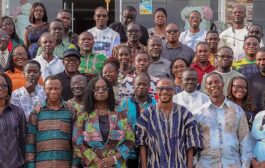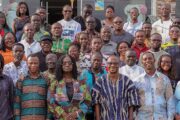


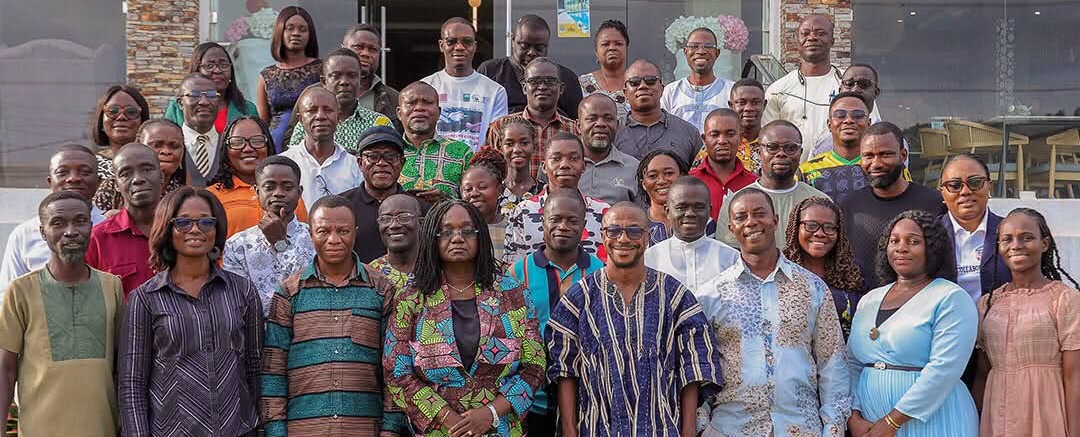
The Nkabom Collaborative at the University of Environment and Sustainable Development (UESD) has begun a two-day capacity-building workshop for members of the Ghana Journalists Association (GJA), Eastern Region, to strengthen media reporting on environmental sustainability, climate action, and green innovation.
The workshop, being held at Abram Hills in the New Juaben South Municipality, seeks to enhance journalists’ understanding of sustainable development issues and improve the quality of reporting on environmental challenges and innovative solutions.
The training forms part of the Nkabom Collaborative’s efforts to foster stronger partnerships with the media in promoting sustainable development and creating public awareness on environmental conservation.
Participants are receiving practical training in several thematic areas, including agro-waste management and the circular economy, aquaculture technology and sustainable food systems, entrepreneurship and green jobs, as well as communication strategies for effective sustainability reporting.
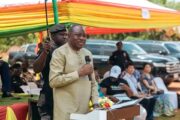
Speaking at workshop, Professor Eric Nyarko-Sampson, Vice-Chancellor of UESD and Principal Investigator of the Nkabom Collaborative, underscored the indispensable role of the media in driving environmental awareness and influencing positive behavioural change.
According to him, the training is intended to empower journalists with accurate knowledge and practical skills to report responsibly on environmental issues while helping them distinguish between factual information and misinformation relating to sustainability.
“The media remain key partners in promoting sustainable development. Through this workshop, we want journalists to better understand the science behind environmental issues and effectively communicate green innovations and sustainability initiatives to the public,” Prof. Nyarko-Sampson said.
He explained that the Nkabom Collaborative is committed to advancing research, innovation, and stakeholder engagement to support Ghana’s transition towards a greener and more sustainable economy.
The Vice-Chancellor encouraged participants to apply the knowledge acquired during the workshop in producing impactful stories that educate the public and inspire action on environmental protection and sustainable development.
As part of the training, facilitators introduced participants to innovative approaches to agro-waste recycling, sustainable aquaculture technologies, climate-smart agriculture, circular economy principles, and entrepreneurship opportunities capable of creating green jobs for Ghana’s growing youth population.
The journalists also explored effective communication techniques for translating complex scientific and environmental information into compelling stories that are easily understood by the public.
Eastern Regional Chairman of the Ghana Journalists Association (GJA), Stephen Ampem-Darko Koranteng, expressed appreciation to the management of UESD and the Nkabom Collaborative for organizing the workshop.
He described the initiative as timely, noting that environmental and climate-related issues have become central to national development and require informed, accurate, and solution-oriented journalism.
Mr. Koranteng said the training would significantly improve journalists’ capacity to produce balanced and impactful stories that highlight environmental challenges while showcasing practical innovations and solutions.
He further pledged the commitment of journalists in the Eastern Region to apply the knowledge gained to promote responsible environmental reporting and contribute meaningfully to Ghana’s sustainable development agenda.
The two-day workshop was to deepen collaboration between academia and the media while equipping journalists with the expertise needed to report effectively on green innovation, environmental sustainability, and climate resilience.
The Nkabom Collaborative is a research and innovation initiative under UESD dedicated to promoting sustainable solutions through collaboration among academia, industry, government, communities, and the media. Its work focuses on addressing environmental challenges while advancing sustainable livelihoods and inclusive development in Ghana.
Source:Mybrytfmonline.com/Nhyiraba Solomon Nartey