

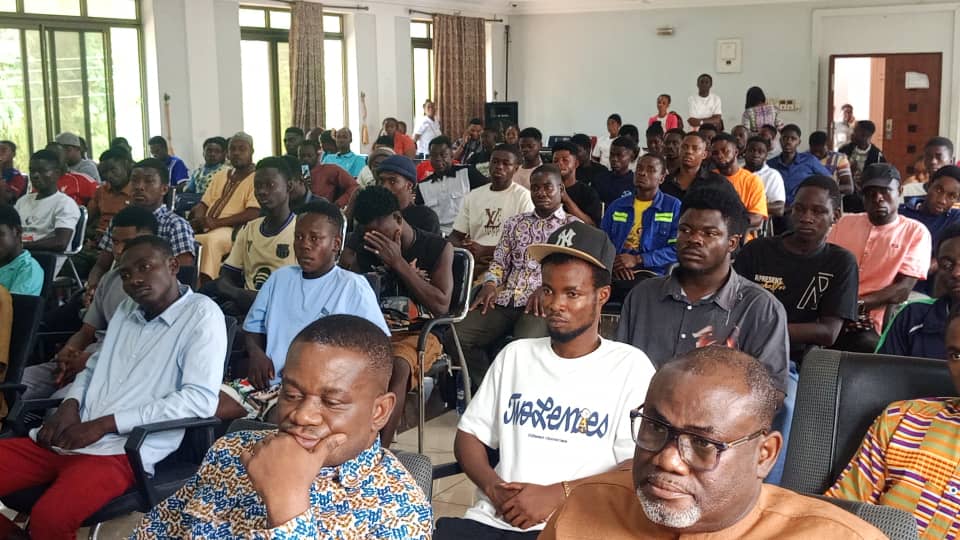
The Eastern Regional Coordinating Council (ERCC), in collaboration with the United Nations Population Fund (UNFPA) with funding from Canadian government has trained more than 270 Master Artisans and apprentice leaders as part of efforts to curb Gender-Based Violence (GBV), teenage pregnancy and other harmful practices in the region.
The training of trainers workshop , held under the UNFPA–Government of Ghana 8th Country Programme (2023–2027), equipped the artisans with knowledge on Sexual and Gender-Based Violence (SGBV), adolescent health, sexual and reproductive rights, and healthy relationships.
The initiative aims to empower artisans who work closely with thousands of young apprentices to serve as frontline educators and protectors in their communities.
The intervention comes at a crucial time, as the Eastern Region continues to record worrying rising statistics on gender based violence, teenage pregnancy, maternal mortality among others.
GBV cases increased from 1,772 in 2016 to 2,189 in 2023, reflecting a 19.04 percent rise in the region.
Despite a decline in adolescent pregnancy rates from 13.1 percent in 2019 to 5.9 percent in 2023, the region registered 25,285 teenage pregnancies within two years, including 669 girls aged 10 to 14.
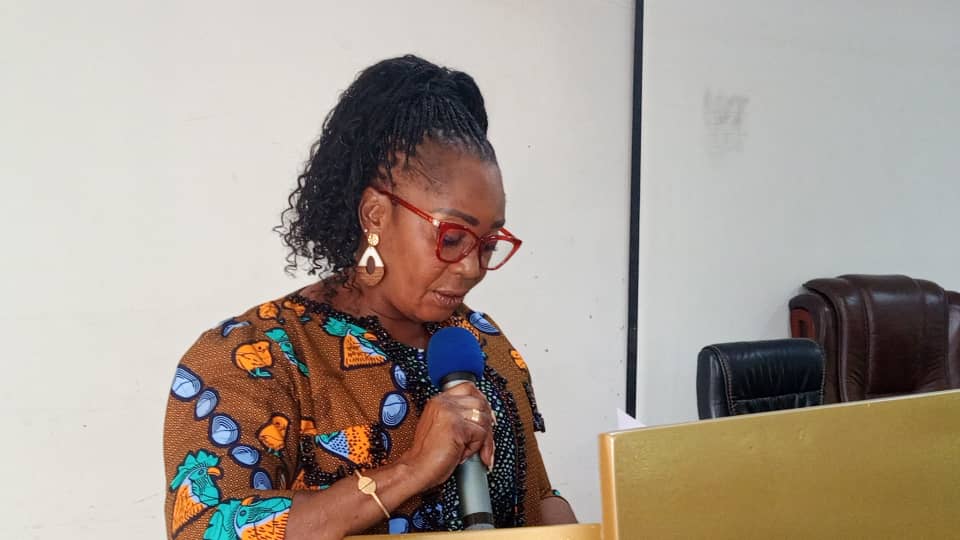
Opening the training, Eastern Regional Minister, Rita Akosua Adjei Awatey, said the programme forms part of the Adolescent Girls Programme (AGP), with support from the Canadian Government.
She emphasized that artisans play a critical role in shaping the lives of young apprentices and must therefore be empowered to guide them.
“Master Artisans mentor thousands of young people. By equipping them with the right knowledge on sexual and reproductive health and rights, we are creating safe spaces for learning, dialogue and informed decision-making,”
she said.
The participants were taken through topics including puberty, consent, GBV response, adolescent rights, STIs, gender equality, family planning and preventive strategies against teenage pregnancy.
Eastern Regional Planning Officer, Michael Agyemang, noted that many apprentices lack basic information on GBV and adolescent health, making the training necessary.
“Most young apprentices have very limited knowledge about these issues. This workshop ensures Master Artisans can educate them, guide them and offer protection,”
he explained.
He added that the next phase of the programme will train 700 in-school adolescents across seven schools, along with the establishment of boys’ clubs in selected districts.
District planning officers will also be trained to integrate adolescent health and GBV interventions into their medium-term plans.
A facilitator, Raymond Teye Djimajor, Head of Community Development Programmes in the Eastern Region, commended the initiative and warned about the growing influence of social media on young people.
“Social media trends are exposing young girls to increasing risks. Development partners must actively occupy the digital space with awareness campaigns,”
he said.
Some of the participants admitted to sexual abuse and teenage pregnancy involving some of their apprentices.
” Some of our apprentices sometimes impregnate young girls who come around to sell to us and because they don’t have money , they stop the work and runaway.so this workshop has indeed empowered us to inculcate Sexual and gender based violence issues into our training. I have learnt a lot here which I didn’t know “. A participant stated.
The trained Master Artisans are expected to step down the training in their respective workshops and communities, helping reduce GBV, teenage pregnancy and other harmful practices through mentorship, education and early intervention.
Source:Mybrytfmonline.com/Obed Ansah